For homeowners in environments subjected to extreme weather patterns, selecting a decking material that withstands harsh climates without demanding constant upkeep is a paramount concern. As of 2026, advancements in material science offer an impressive array of low-maintenance options that deliver both durability and aesthetic appeal. This analysis highlights seven leading decking materials engineered to endure the toughest conditions, significantly reducing the long-term commitment to maintenance and ensuring lasting beauty for any outdoor living space.
The Imperative for Durable Decking in Challenging Environments
Outdoor decking is exposed to a relentless assault from the elements. Harsh climates present a unique set of challenges, including intense ultraviolet (UV) radiation that causes fading and degradation, persistent moisture leading to rot and mold, and extreme temperature fluctuations that induce warping and cracking. Freeze-thaw cycles can wreak havoc on permeable materials, while pests like termites pose a constant threat to organic substances. Traditional wood decking, while aesthetically pleasing, often requires extensive annual sealing, staining, and repairs to combat these stressors.
The demand for materials that offer superior resistance to these environmental factors, coupled with minimal maintenance, has driven significant innovation in the decking industry. For 2026, material science has delivered solutions that not only promise longevity but also enhance the aesthetic versatility and sustainability of outdoor living spaces. The focus has shifted towards engineered products and modified natural woods that minimize water absorption, resist fungal growth, repel insects, and maintain structural integrity under duress.
Top Low-Maintenance Decking Materials for Harsh Climates (2026)
The following materials represent the forefront of decking technology, offering exceptional performance and reduced upkeep for properties in challenging conditions.
1. Advanced Composite Decking
-
Description: Advanced composite decking, often referred to as wood-plastic composite (WPC), combines wood fibers with recycled plastics, encapsulated by a high-performance polymer cap. Modern formulations in 2026 feature multi-tonal aesthetics and highly engineered capping layers that provide superior protection.
-
Durability in Harsh Climates: The polymer cap provides excellent resistance to fading, scratching, and staining. Composites are highly resistant to mold, mildew, and insect infestation due to their non-organic composition and minimal water absorption. Their engineered core offers improved dimensional stability against temperature changes.
-
Low-Maintenance Aspect: Requires only routine cleaning with soap and water to maintain its appearance. No sanding, staining, or sealing is necessary over its lifespan.
-
2026 Trends: Emphasis on deeper, more realistic wood grain embossing; lighter core materials for easier installation; and greater use of sustainably sourced recycled content, aligning with broader environmental initiatives.
2. Cellular PVC Decking
-
Description: Made from 100% virgin or recycled polyvinyl chloride (PVC), cellular PVC decking contains no organic fillers, making it entirely synthetic. Advanced manufacturing techniques in 2026 produce lighter, stronger boards with realistic wood-grain textures.
-
Durability in Harsh Climates: Impervious to moisture, rot, and insects, making it an ideal choice for humid, coastal, or rainy regions. Offers superior fade and stain resistance, and excellent performance in freeze-thaw cycles without cracking or warping.
-
Low-Maintenance Aspect: Extremely easy to clean with basic household cleaners. Does not require sealing, staining, or painting.
-
2026 Trends: New formulations focus on enhanced surface cooling technology to reduce heat absorption in direct sunlight, and improved scratch resistance for high-traffic areas. Expanded color palettes with hyper-realistic wood tones are also prominent.
3. Mineral-Based Composite (MBC) Decking
-
Description: A newer innovation gaining significant traction by 2026, MBC decking blends natural minerals (such as limestone or rice husks) with a polymer resin, often reinforced with fiberglass. This results in an ultra-dense, non-wood core.
-
Durability in Harsh Climates: Exceptionally stable with minimal thermal expansion and contraction, which prevents gapping and buckling. High resistance to impact, fire, moisture, and pests. Often lighter than traditional composites while maintaining superior strength.
-
Low-Maintenance Aspect: Very low upkeep, typically requiring only occasional rinsing to remove dirt and debris. Resists staining and fading effectively.
-
2026 Trends: Manufacturers are refining formulations for even lighter boards that retain their strength, along with advanced surface textures that mimic exotic hardwoods while offering enhanced slip resistance.
4. Thermally Modified Wood (TMW)
-
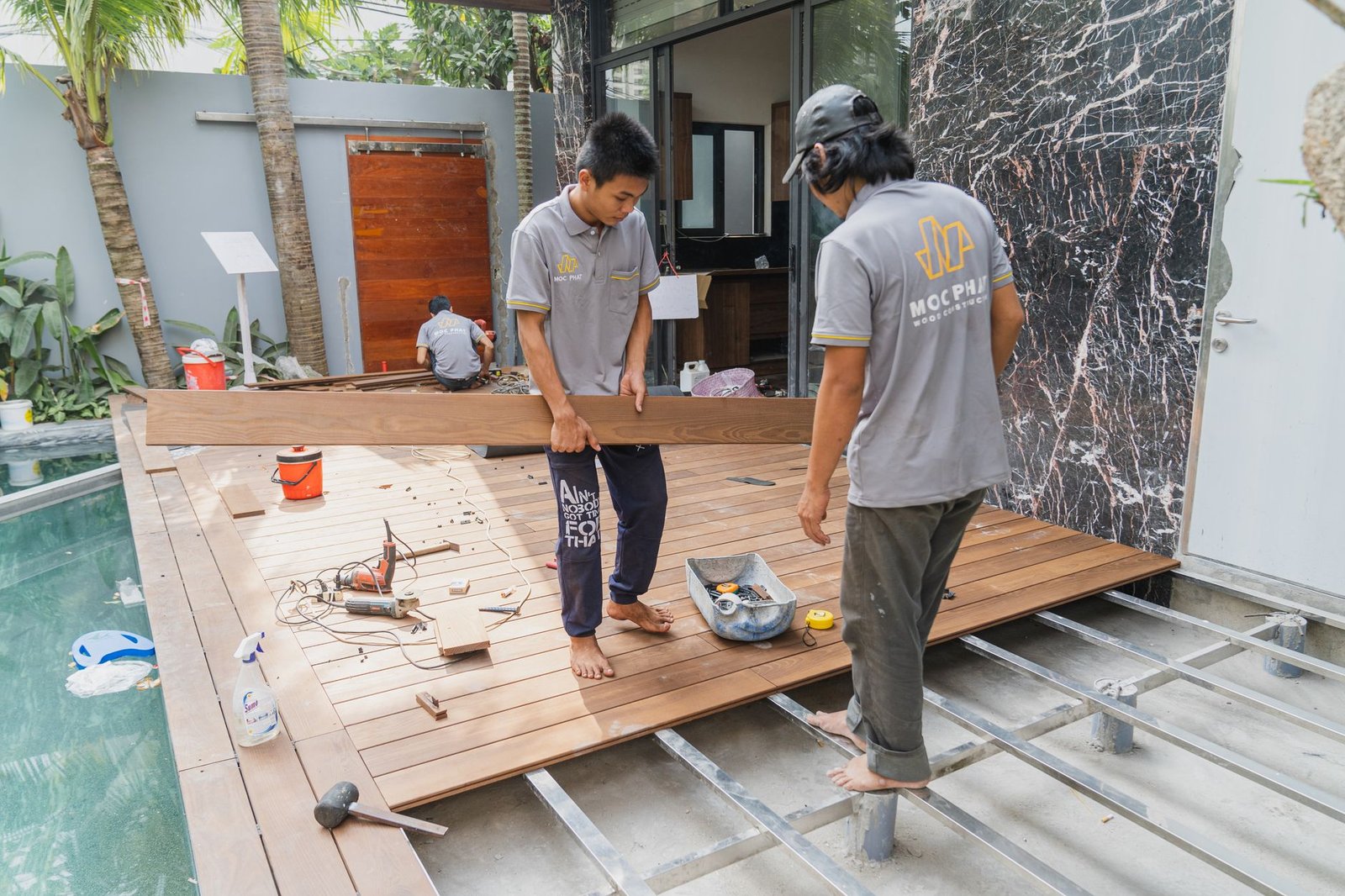
Description: This material involves heating natural wood (e.g., ash, pine, spruce) to high temperatures in an oxygen-free environment. This process alters the wood’s cellular structure, improving its properties without chemical additives.
-
Durability in Harsh Climates: Significantly improved dimensional stability, making it less prone to swelling, shrinking, warping, and checking. The modification process renders the wood unpalatable to insects and highly resistant to rot and fungi. Water absorption is drastically reduced.
-
Low-Maintenance Aspect: Does not require chemical treatments or preservatives. Periodic sealing can be applied to maintain its rich, dark color; otherwise, it will naturally weather to a silvery-grey patina, which many find desirable.
-
2026 Trends: Increased availability of diverse wood species for modification and new protective finishes that extend color retention while maintaining breathability.
5. Enhanced Generations of Pressure-Treated Lumber
-
Description: Wood infused with preservatives under pressure to resist decay and insects. The 2026 market features next-generation treatments, notably those using micronized copper azole (MCA) and alkaline copper quaternary (ACQ), which offer improved penetration and reduced environmental impact compared to older treatments.
-
Durability in Harsh Climates: Excellent resistance to rot, fungal decay, and insect infestation is a hallmark. Modern treatments often include integrated water repellents, which enhance dimensional stability and reduce common issues like cracking and splintering.
-
Low-Maintenance Aspect: While still wood, the advanced treatments significantly reduce the need for constant vigilance against rot and pests. Regular cleaning and periodic sealing or staining (every 2-3 years) are recommended to maintain optimal appearance and further protect the wood’s surface.
-
2026 Trends: Focus on more environmentally benign treatment chemicals; increased incorporation of enhanced water repellents directly into the treatment process; and products engineered for specific applications, such as ground contact or freshwater immersion.
6. Aluminum Decking
-
Description: Crafted from extruded aluminum, often finished with a durable powder coating for color and protection. Its interlocking design is a common feature, creating a seamless, often watertight, surface.
-
Durability in Harsh Climates: Offers unmatched resistance to rot, insects, fire, and extreme weather conditions. It will not warp, crack, or split. Aluminum is dimensionally stable and excellent at dissipating heat, making it cooler underfoot than many other materials. Ideal for areas prone to wildfires.
-
Low-Maintenance Aspect: Requires minimal care beyond occasional washing to remove dirt. The powder coating is highly resistant to fading and chipping.
-
2026 Trends: Innovations include advanced textured coatings that enhance slip resistance and mimic more traditional aesthetics, alongside modular systems that allow for faster, simpler installation.
7. Fiberglass Decking
-
Description: A composite material created by embedding glass fibers within a polymer resin, forming extremely strong yet lightweight panels. Often used in marine applications due to its resilience.
-
Durability in Harsh Climates: Impervious to moisture, rot, insects, and most chemicals. Offers high impact resistance and dimensional stability. Its lightweight nature makes it suitable for elevated structures or areas where weight is a concern. Excellent UV inhibitors are integrated into 2026 formulations to prevent color degradation.
-
Low-Maintenance Aspect: Very low maintenance, needing only sporadic cleaning. It will not warp, splinter, or crack.
-
2026 Trends: Development of lighter and stronger panels, integrated anti-slip textures that do not compromise aesthetics, and a wider range of colors and surface finishes that better integrate with contemporary home designs.
Selecting the Ideal Decking for Long-Term Value
When choosing among these advanced materials, several factors warrant consideration. The specific climatic challenges of a property—be it intense sun, heavy rainfall, extreme cold, or coastal salt air—should guide the decision. Aesthetic preferences, including desired color, texture, and overall architectural style, are also crucial. Budget allocation is a practical consideration, though it is important to weigh the initial investment against the long-term savings in maintenance and replacement costs. Environmental impact, such as the use of recycled content or sustainable sourcing, is increasingly a factor for many homeowners.
Ultimately, consulting with experienced decking professionals can provide invaluable insight. They can assess specific site conditions, recommend materials best suited for the application, and ensure that the chosen material aligns with local building codes and aesthetic goals. Professional installation is paramount to leveraging the full benefits of any high-performance decking material.
Maximizing Decking Longevity: Installation and Upkeep
Even with the most durable materials, proper installation is critical for maximizing longevity and performance. An adequately prepared substructure, proper ventilation beneath the deck, and adherence to manufacturer guidelines for fastening and spacing are essential. These practices prevent moisture buildup and allow for natural expansion and contraction, safeguarding the deck’s integrity.
While these materials are defined by their low-maintenance attributes, basic cleaning routines are still beneficial. Regular sweeping to remove leaves and debris, and occasional washing with mild soap and water, will preserve the deck’s appearance and prevent the accumulation of dirt or organic matter that could lead to minor surface issues. Promptly addressing spills or stains also contributes to long-term visual appeal.
Ultimately, the evolution of decking materials in 2026 provides homeowners with unprecedented options for creating enduring and beautiful outdoor spaces. By carefully considering the specific environmental challenges a property faces and aligning those needs with the robust capabilities of modern decking solutions, long-term satisfaction and minimal maintenance are readily achievable. Investing in these advanced materials translates into more time enjoying an outdoor sanctuary and less time on arduous upkeep.