
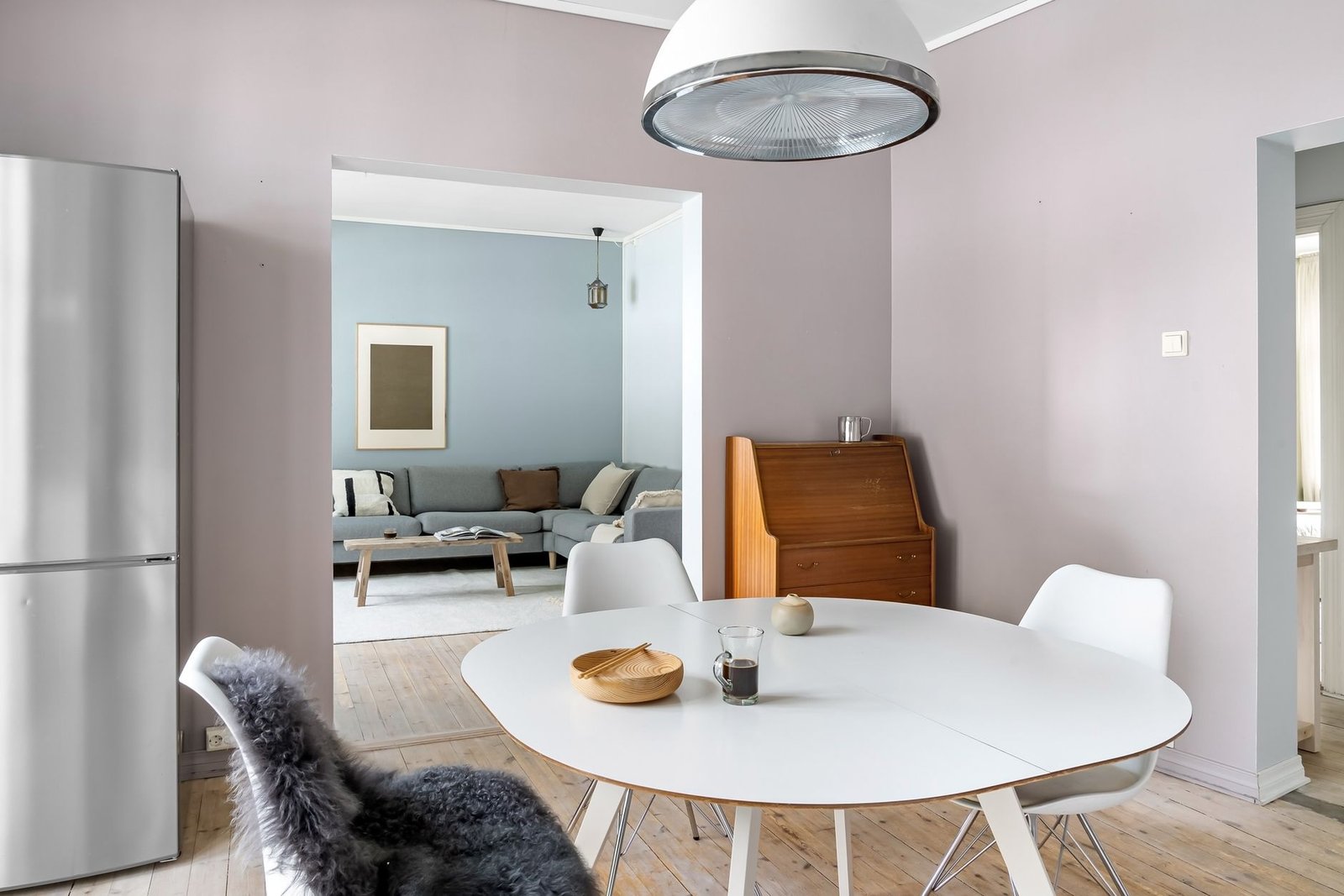
The Challenge of Compact Interiors
For residents grappling with the challenge of limited square footage, the perception of space can often feel more constricting than the reality. A clever application of paint color, however, offers a powerful, cost-effective solution to visually expand small rooms. This article delves into seven specific paint colors and accompanying design principles for 2026 that effectively create an illusion of greater openness and airiness within any compact interior.
The Science Behind Visual Expansion
The human eye’s perception of space is intricately linked to how light interacts with surfaces and colors. Lighter colors reflect more light, making walls appear to recede and surfaces seem further away. In contrast, darker colors absorb light, causing walls to feel closer. Beyond simple reflectivity, certain cool-toned hues like blues and greens are known to optically push boundaries outward, while warmer tones tend to advance. Modern paint formulations in 2026 often incorporate advanced pigments and microspheres to enhance light reflection and diffusion, allowing for a broader spectrum of shades to be utilized for spatial expansion.
7 Paint Colors to Visually Expand Small Spaces in 2026
1. Softened Cloud White
An enduring classic, a softened cloud white remains a top choice for its ability to create an expansive, airy canvas. This isn’t a stark, sterile white, but rather one with a subtle hint of warmth or coolness, preventing the space from feeling clinical. In 2026, whites with undertones of greige or very pale blue are popular for their ability to reflect maximum light while adding a touch of sophisticated nuance. The homeowner can apply this shade uniformly across walls and ceilings to blur the boundaries, enhancing the feeling of a single, continuous volume. Consider pairing with light-toned, sustainable wood flooring or polished concrete for a modern, minimalist aesthetic.
2. Pale Sky Blue
Drawing inspiration from the boundless sky, pale sky blue is a quintessential color for evoking openness. Its cool undertones naturally recede, making walls appear further away than they actually are. For 2026, variations leaning towards an almost ethereal, desaturated quality are trending, often with a whisper of gray. This color works exceptionally well in rooms receiving ample natural light, where it enhances brightness without becoming overwhelming. Residents often find it particularly effective in bedrooms and bathrooms, creating a serene, spacious retreat. Pair with smart textiles featuring subtle geometric patterns and matte black fixtures for a contemporary edge.
3. Misted Sage Green
Embracing biophilic design principles, misted sage green offers a calming, organic feel while contributing to visual expansion. This muted, desaturated green has a grounding effect but, critically, its lighter value prevents it from absorbing too much light. The 2026 iteration often features a hint of gray, making it incredibly versatile. It pairs beautifully with natural wood tones, recycled glass accents, and living plant installations, reinforcing a connection to nature without cluttering the space. For optimal effect, consider extending this color to built-in shelving or cabinetry for a cohesive, seamless look that minimizes visual breaks.
4. Greige Whisper
The perfect marriage of gray and beige, greige offers sophisticated warmth and impressive adaptability. A light greige, specifically one with cooler undertones, acts as an excellent neutral that can make small spaces feel larger by providing a soft backdrop that doesn’t draw attention to the walls themselves. This chameleon-like color shifts gracefully with varying light conditions, always maintaining an understated elegance. In 2026, the trend leans towards lighter, almost translucent greiges, often seen with tactile finishes like lime wash or subtle Venetian plaster effects. The user can confidently apply it in living areas or hallways, creating a continuous flow throughout compact floor plans.
5. Barely-There Lavender
Unexpected yet remarkably effective, a barely-there lavender introduces a touch of subtle color without overwhelming a small room. The key is extreme paleness, where the purple undertone is just perceptible, providing a soothing, expansive quality. This cool-toned pastel reflects light beautifully and adds a unique, modern flair, moving beyond traditional neutrals. For 2026, designers are exploring lavenders with gray or pink nuances, enhancing their sophisticated appeal. This shade is particularly well-suited for creative spaces, reading nooks, or guest bedrooms, inviting a sense of tranquility and spaciousness. Integrate with iridescent finishes or metallic accents for a futuristic yet calming ambiance.
6. Reflective Silver-Gray
For a contemporary and sleek aesthetic, a light, reflective silver-gray can work wonders in expanding a small footprint. The metallic sheen, often achieved with specialized low-VOC, high-reflectivity paints common in 2026, bounces light across the room, mimicking the effect of natural light and larger windows. This color introduces a sophisticated, urban edge. It performs best when paired with minimalist furniture and clean lines, preventing the space from feeling cluttered. The resident might consider using this on a single wall to create depth or throughout a room for a cohesive, modern capsule. Advanced materials like electrochromic glass and smart lighting panels complement this shade perfectly.
7. Warm Oat Beige
While cool tones often dominate discussions of spatial expansion, a very light, warm oat beige can also be incredibly effective, especially in rooms lacking natural light. This particular beige has yellow or even a very subtle pink undertone, providing a cozy warmth without feeling heavy. Its lightness ensures ample light reflection, and the warmth prevents the space from appearing cold or stark. In 2026, warm neutrals with a focus on tactile finishes are prominent, and a matte oat beige fits this perfectly. It creates an inviting, comfortable atmosphere that feels larger due to its gentle light diffusion. Consider pairing with sustainable cork flooring or natural fiber rugs for an earthy, expanded feel.
Beyond Color: Complementary Design Strategies for 2026
Strategic Lighting
Maximizing both natural and artificial light is paramount. Sheer, floor-to-ceiling drapes allow light to permeate while drawing the eye upward, enhancing perceived height. Mirrors strategically placed opposite windows amplify light and create an illusion of depth. For artificial lighting, layered lighting — a combination of ambient, task, and accent — prevents shadows and brightens every corner. Recessed lighting, slim LED strips, and smart lighting systems controllable via integrated home hubs are dominant trends for optimizing illumination in 2026 without adding visual bulk.
Minimalist Furnishings & Layouts
Decluttering is foundational. Each piece of furniture should ideally serve a purpose, with multi-functional items being particularly valuable. Opting for furniture with exposed legs or slender profiles creates visual “air,” preventing the room from feeling grounded and heavy. Vertical space should be utilized with tall, narrow shelving or wall-mounted units, drawing the eye upward. In 2026, modular, adaptable furniture crafted from lightweight, recycled materials is highly favored for compact living, allowing for flexible configurations without permanent bulk.
Reflective Surfaces & Materials
Incorporating reflective elements further aids in spatial expansion. Beyond mirrors, consider high-gloss lacquered finishes on cabinetry, glass tabletops, or polished metal accents. For 2026, sustainable materials like recycled glass tiles, polished concrete, and specialized high-reflectivity wall panels are popular. These surfaces bounce light around the room, making it appear brighter and more open. A minimalist approach to material selection ensures these reflective elements enhance rather than overwhelm the space.
Modern Textures and Finishes (2026 Trends)
The interplay of textures can add depth without consuming space. Matte finishes for walls, a significant trend in 2026, absorb light softly, creating a sophisticated backdrop that can make a room feel more enveloping yet still spacious when paired with lighter colors. Contrasting these with subtle, tactile textures in upholstery or area rugs adds interest without visual clutter. Integrated smart home technology, often hidden behind seamless panels or operated via voice commands, contributes to a clean, uncluttered aesthetic essential for expanding small rooms.
Conclusion
Transforming a small room into a perceived haven of spaciousness is an achievable goal for any resident. By strategically selecting paint colors that reflect light and optically recede, combined with thoughtful design strategies for lighting, furnishing, and material choices, a significant impact can be made. The 2026 palette and accompanying design approaches offer versatile tools to create environments that feel comfortable, expansive, and aesthetically pleasing, proving that even the most compact areas can exude grandeur and openness.