
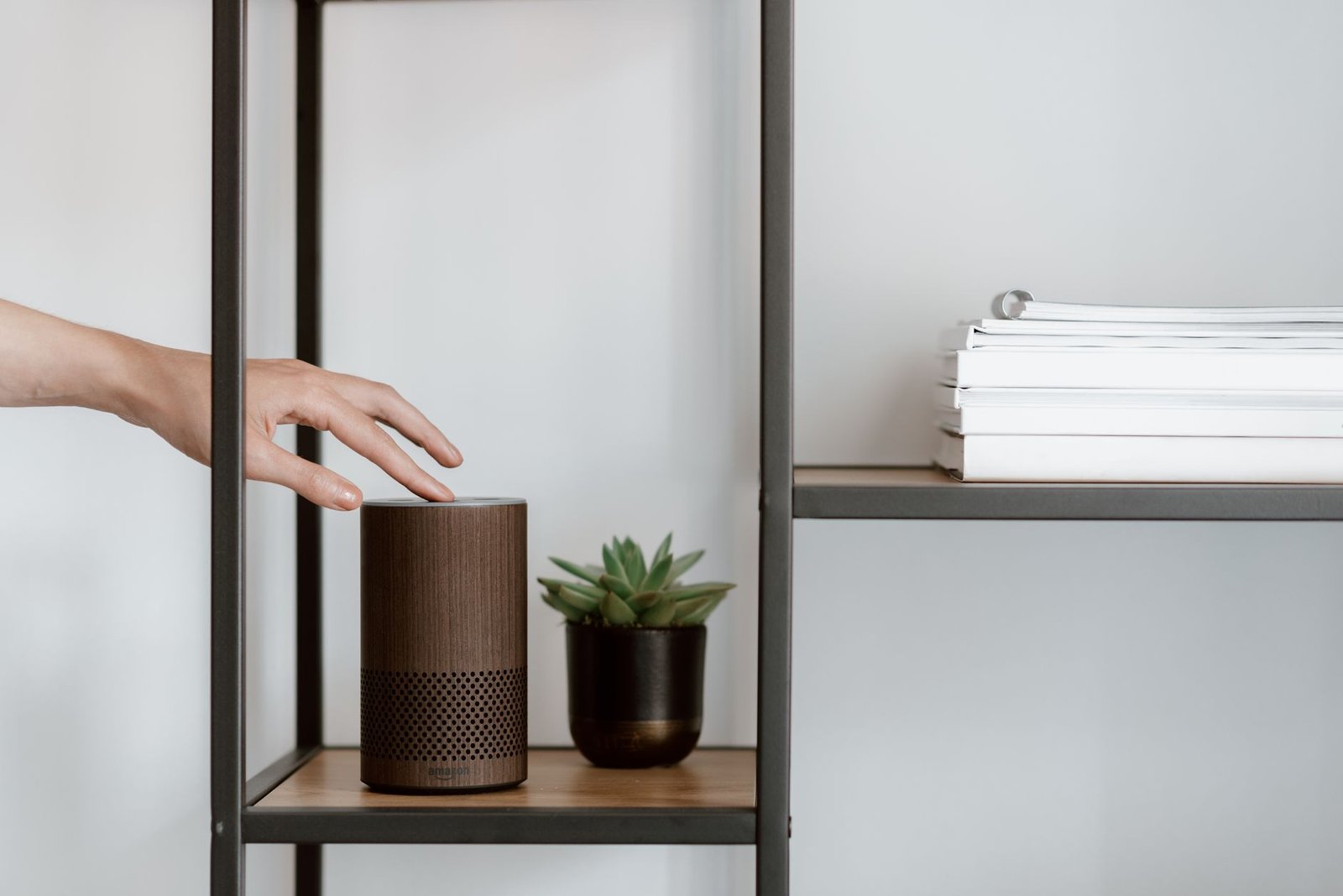
In 2026, the decision between a dedicated smart home hub and a standalone voice assistant for superior whole-home control remains a pivotal consideration for residents building or upgrading their connected living spaces. While voice assistants excel in intuitive interaction and widespread device compatibility, dedicated hubs typically provide more robust local processing, enhanced security, and broader protocol support, making the optimal choice dependent on specific homeowner priorities and the complexity of the smart ecosystem desired.
As the smart home landscape matures, significant advancements in interoperability, AI, and energy efficiency are influencing this choice. Understanding the distinct capabilities and limitations of each platform, alongside their evolving synergy, is crucial for establishing a truly cohesive and future-proof domestic environment.
Dedicated Smart Home Hubs: The Foundation of Control
Core Capabilities and Advantages
Dedicated smart home hubs serve as the central nervous system for a connected residence, offering robust control and automation capabilities. These devices, often featuring advanced ARM-based processors and enhanced onboard memory in 2026, prioritize local processing. This means that many commands and automations are executed directly within the home network, significantly reducing reliance on cloud services. The benefits include faster response times, increased reliability during internet outages, and enhanced data privacy, as sensitive information remains within the local network.
A primary advantage of hubs is their protocol agnosticism. Modern hubs seamlessly integrate a multitude of communication standards, including Wi-Fi, Bluetooth LE, Zigbee, Z-Wave, and crucially, the nascent yet rapidly adopted Thread and Matter protocols. This broad support ensures compatibility with a vast array of devices from different manufacturers, allowing the resident to select best-in-class components without concern for ecosystem fragmentation. Advanced automation engines within hubs facilitate intricate routines, allowing for complex conditional logic that may trigger multiple devices across various protocols based on environmental sensors, time of day, or resident presence.
Security is another strong suit. By minimizing cloud dependency, hubs inherently offer a more secure foundation. Many 2026 hub models feature hardware-level encryption and secure boot processes, providing a formidable defense against unauthorized access. This local control also extends to customizability, offering homeowners a deeper level of fine-tuning for device behaviors and scene creations that might be challenging or impossible with a voice assistant alone.
Considerations for Implementation
While powerful, dedicated hubs often present a steeper initial learning curve. The setup process can be more involved, requiring the user to configure various devices, create automations, and manage network settings. The upfront cost for a high-quality, feature-rich hub can also be higher than a basic voice assistant speaker. However, for those prioritizing security, reliability, and complex automation, this investment often yields superior long-term control and satisfaction. Furthermore, the aesthetic integration of hubs has improved, with many models designed to be unobtrusive or even blend seamlessly with modern interior design principles, often utilizing minimalist designs and sustainable recycled material composites for their casings.
Voice Assistants: The Intuitive Interface
Accessibility and Broad Ecosystems
Voice assistants like Amazon Alexa, Google Assistant, and Apple Siri have revolutionized smart home interaction by offering an incredibly intuitive, natural language interface. In 2026, their natural language processing (NLP) capabilities have reached new heights, allowing for more nuanced commands and context-aware interactions. The primary appeal lies in their ease of use; a resident can simply speak a command to control lights, adjust thermostats, or stream media, making smart home technology accessible to a broader audience.
Voice assistants boast ubiquitous device integration, extending beyond dedicated speakers to smart displays, televisions, vehicles, and even smart mirrors. This widespread presence means a resident is rarely far from a control point. Their ecosystems are vast, supporting tens of thousands of devices and services, from smart lighting and climate control to door locks and entertainment systems. Initial setup is typically straightforward, often involving little more than plugging in a device and connecting it to Wi-Fi. The immediate gratification and minimal technical barrier make them an excellent entry point into smart home living.
Inherent Limitations and Concerns
Despite their convenience, voice assistants come with inherent limitations. The most significant is their heavy reliance on cloud services. Nearly all voice commands are processed in the cloud, meaning an active internet connection is essential for functionality. This cloud dependency can introduce latency and, more critically, renders many smart home functions unusable during internet outages. Data privacy is another persistent concern, as audio recordings are sent to cloud servers for processing, raising questions about data retention and potential misuse. While providers have made strides in transparency and user controls, the fundamental architecture involves external data processing.
Voice assistants typically offer less robust local processing compared to hubs. While some edge processing occurs (e.g., for wake word detection), complex automations often still depend on cloud-based routines. This can limit the sophistication of interconnected actions and the speed at which they execute. Furthermore, while their broad device support is an advantage, it sometimes comes at the cost of deep, intricate control over individual device parameters that a dedicated hub might offer.
Synergy and Evolving Trends in 2026
The Rise of Hybrid Models
In 2026, the prevailing trend is not an either/or scenario, but rather a synergistic approach. Many homeowners are adopting hybrid models where a dedicated smart home hub handles the heavy lifting of local processing, robust automation, and multi-protocol communication, while voice assistants serve as the intuitive, natural language front-end. This setup leverages the strengths of both, providing the reliability and security of a hub with the unparalleled convenience of voice control. Edge AI processing in both hubs and advanced voice assistant devices is further reducing cloud reliance for sensitive tasks, such as localized facial recognition for access control or advanced presence detection.
Standardization and Interoperability: Matter and Thread
The widespread adoption of Matter and Thread protocols by 2026 has significantly blurred the lines between hubs and voice assistants. Matter, built on IP (Internet Protocol), ensures unparalleled interoperability, allowing devices from different brands to communicate seamlessly. Thread provides a self-healing, low-power mesh network that enhances reliability and range. Many voice assistant speakers now double as Thread border routers and Matter controllers, essentially gaining ‘hub-like’ capabilities for devices that support these standards. This evolution means that even a standalone voice assistant can offer a more robust local control experience than in previous years, especially for a streamlined Matter-certified ecosystem. However, for devices still relying on older protocols like Z-Wave or non-Matter Wi-Fi, a dedicated hub remains indispensable.
Sustainable Smart Home Design
The year 2026 also sees a heightened focus on sustainability within smart home technology. Both hubs and voice assistants are being engineered for greater energy efficiency, utilizing low-power chipsets and optimizing standby modes. There’s an increasing emphasis on longer product lifecycles, repairability, and the use of recycled and sustainably sourced materials in device manufacturing. Integration with smart grid solutions and real-time energy monitoring via both platforms allows residents to optimize energy consumption, contributing to a more eco-conscious lifestyle.
Making the Decision: Optimal Whole-Home Control
Assessing Resident Needs and Priorities
The optimal choice between a smart home hub and a voice assistant, or indeed a combination, hinges on the individual resident’s priorities. For the homeowner who values paramount security, local processing, and complex, reliable automations, a dedicated smart home hub is unequivocally the superior foundation. This platform offers the most robust control and the greatest resilience against internet outages or privacy breaches.
Conversely, for the resident prioritizing ease of use, broad device compatibility for common tasks, and intuitive interaction, a voice assistant often provides the most direct and satisfying experience. Its widespread integration across devices simplifies daily routines and makes smart home control accessible to every member of the household.
Recommendations for Diverse Homeowners
- For the Tech-Savvy Integrator: A dedicated hub remains the core, offering unparalleled customization and control over complex automations and multi-protocol devices. A voice assistant can then be layered on top as a convenient interface.
- For the Convenience-Seeking Resident: An advanced voice assistant, particularly one acting as a Matter controller and Thread border router, can provide excellent whole-home control for a streamlined ecosystem, offering simplicity and broad access.
- For the Security-Conscious Homeowner: A strong preference for a dedicated hub that minimizes cloud reliance is recommended, ensuring sensitive data and critical automations remain within the local network.
Ultimately, for maximum flexibility, reliability, and convenience in 2026, a combined approach often yields the best results. Leveraging a robust smart home hub for core functions and security, while integrating voice assistants for accessible, natural language interaction, empowers the homeowner with comprehensive, future-proof whole-home control. The intelligent home of today is one that adapts to its resident’s needs, offering a harmonious blend of foundational strength and intuitive interaction.