
When planning a new outdoor living space in 2026, homeowners face a pivotal decision regarding decking materials: traditional wood or modern composite. The ideal choice hinges on a balance of durability, maintenance preferences, long-term cost, and desired aesthetic. This article provides a comprehensive comparison to guide residents toward the optimal decking solution for their specific needs and lifestyle, incorporating the latest industry trends and material advancements pertinent to the current year.
Durability and Lifespan Considerations in 2026
The longevity and resilience of a deck are paramount, and distinct differences exist between wood and composite materials.
The Enduring Appeal and Challenges of Wood Decking
Traditional wood decking, whether pressure-treated pine, cedar, redwood, or premium hardwoods like ipe or tigerwood, offers a natural, organic beauty. However, its organic nature also brings inherent vulnerabilities. Wood is susceptible to environmental stressors such as moisture, UV radiation, and temperature fluctuations, which can lead to rot, insect infestation, warping, cracking, and splintering over time. Even with diligent maintenance, a standard wood deck typically lasts 10 to 15 years, while high-density hardwoods may extend to 25 years or more under ideal conditions. In 2026, advancements in wood preservatives and sealing technologies continue to improve wood’s resistance to these challenges, but the fundamental need for protection remains.
The Engineered Resilience of Composite Decking
Composite decking, a blend of recycled plastic and wood fibers, is engineered for superior resistance to many of wood’s inherent weaknesses. Modern composite boards are designed to resist rot, insects, splintering, and warping. A significant development for 2026 is the widespread adoption of capped composite technology, where a durable polymer shell encases the core. This cap provides enhanced protection against fading, staining, scratching, and mold/mildew growth, substantially increasing the material’s lifespan and maintaining its aesthetic appeal. Many composite manufacturers offer warranties extending 25 to 50 years, reflecting confidence in their products’ enduring quality. Furthermore, the 2026 market sees composite materials with improved fire ratings and enhanced heat dissipation properties, addressing previous concerns in certain applications.
Maintenance Requirements: Time and Effort in Focus
The commitment required to maintain a deck is a crucial factor, impacting both the homeowner’s time and long-term expenses.
The Regular Care Demanded by Wood
Wood decking requires a consistent maintenance regimen to preserve its appearance and structural integrity. This typically involves annual or biennial cleaning, sanding, and the application of stains or sealants to protect against moisture and UV damage. Failure to adhere to this schedule can lead to rapid deterioration, color loss, and the proliferation of mold and mildew. These tasks are time-consuming and often require specialized tools and products, representing a significant ongoing investment of labor or professional service costs.
The Low-Maintenance Promise of Composite
One of the most compelling advantages of composite decking, especially for the 2026 homeowner, is its minimal maintenance profile. These decks generally require only periodic cleaning with soap and water to remove dirt and debris. There is no need for sanding, staining, or sealing throughout the life of the deck. This low-effort approach aligns perfectly with modern lifestyles, freeing up residents’ time and eliminating recurring maintenance expenses. The advanced capping layers on 2026 composite products are designed to shed grime more effectively, further simplifying upkeep.
Cost Analysis: Initial Outlay vs. Long-Term Value
Understanding the financial implications involves looking beyond the initial purchase price to the total cost of ownership over the deck’s lifespan.
The Varied Price Point of Wood
The upfront cost of wood decking varies significantly by species. Pressure-treated pine is often the most economical option initially, while cedar and redwood fall into a mid-range. Exotic hardwoods can be as expensive, or even more so, than many composite options per linear foot. However, the initial material cost for wood is only part of the equation. Over a 15-year period, the cumulative cost of cleaners, sealants, stains, and potential repairs can add substantially to the overall expense, sometimes doubling the initial investment. This ongoing expenditure is a critical consideration for budget-conscious homeowners in 2026.
The Investment in Composite Decking
Composite decking typically has a higher upfront material cost compared to standard pressure-treated wood, often falling into a similar price bracket as premium hardwoods. However, this higher initial investment is largely offset by the drastically reduced maintenance requirements. With no need for yearly staining or sealing, the long-term cost of ownership for composite decks is frequently lower than that of wood. When factoring in the lifespan, which is often twice that of many wood decks, composite offers a superior long-term value proposition for many residents. In 2026, competitive pricing and a wider range of composite products have made this option more accessible across various budget points.
Aesthetics and Design Versatility for 2026 Outdoor Spaces
The visual appeal of a deck significantly contributes to the overall ambiance of an outdoor living area.
The Natural Charm and Adaptability of Wood
Wood decking is prized for its authentic, natural beauty, offering unique grain patterns and an organic warmth that synthetic materials often strive to replicate. Homeowners can choose from various wood species, each with distinct color tones and characteristics. Furthermore, wood can be stained or painted to match specific design schemes, providing a degree of customization that evolves with taste. The natural aging process of wood, if left untreated, results in a charming silver-gray patina that some find highly desirable.
The Engineered Beauty and Consistency of Composite
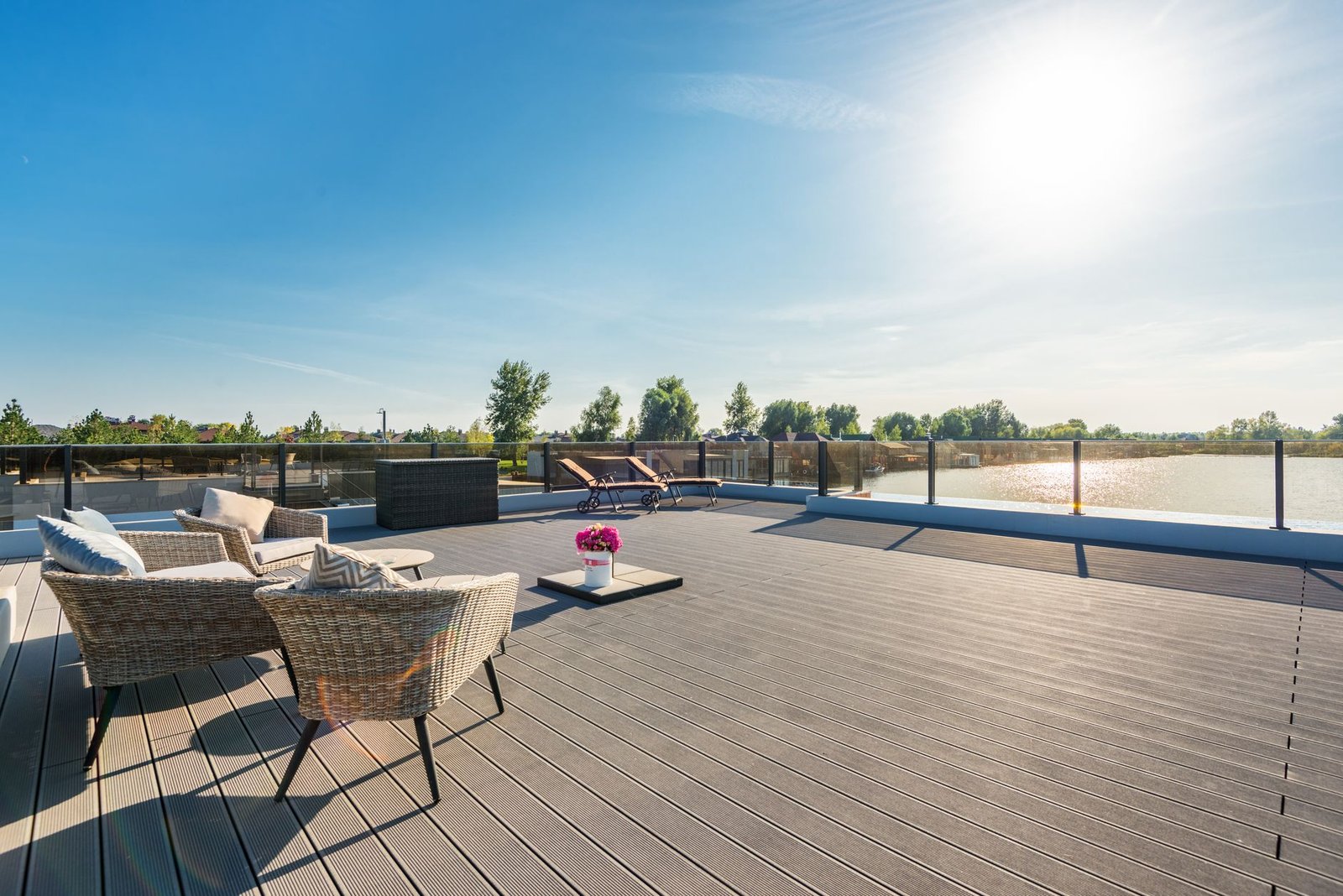
Composite decking has made significant strides in replicating the look and feel of natural wood, with 2026 innovations pushing realism to new heights. Modern composites are available in a vast array of colors, from traditional wood tones to contemporary grays and multi-tonal streaked boards that mimic natural wood variations. Advanced embossing techniques create highly authentic wood-grain textures, often with a more uniform and consistent appearance than natural wood. The color consistency of composite, coupled with its resistance to fading, ensures that the deck’s intended aesthetic is maintained over many years. Hidden fastening systems, standard for many composite installations in 2026, also contribute to a sleek, unblemished surface that enhances modern design.
Environmental Considerations and 2026 Sustainability
For the environmentally conscious homeowner, the ecological footprint of decking materials is an important factor.
The Renewable Aspect of Wood
Wood is a renewable resource, and when sourced from sustainably managed forests certified by organizations like the Forest Stewardship Council (FSC), it represents an environmentally responsible choice. Wood also sequesters carbon throughout its life, and at the end of its useful life, it is biodegradable. However, the environmental impact of chemical treatments for pressure-treated wood and the energy used in transportation must also be considered.
The Recycled Content of Composite
Many composite decking products are manufactured using a high percentage of recycled plastics and wood fibers, diverting waste from landfills. This aspect makes composite an attractive option for homeowners prioritizing circular economy principles. The manufacturing process, however, can be energy-intensive. While composite decks boast a long lifespan, their non-biodegradable nature means they require specialized recycling or disposal at end-of-life. In 2026, manufacturers are increasingly focused on reducing the carbon footprint of production and developing more easily recyclable composite formulations.
Installation Nuances and Modern Decking Innovations in 2026
The installation process and compatibility with smart home features also differ between materials.
Wood Installation and Traditional Methods
Installing a wood deck typically involves cutting individual boards to size and fastening them with visible screws or nails, though hidden fastener systems are also available. The inherent inconsistencies in natural wood may require more selective board placement and cutting to achieve a seamless look. Traditional methods are well-understood by builders, but precision and skilled craftsmanship are key.
Composite Installation and 2026 Smart Integration
Composite decking often features consistent dimensions and can be installed with specialized hidden fastening systems that clip into grooves along the board edges, resulting in a cleaner, screw-free surface. This can sometimes lead to quicker installation times for experienced professionals. A significant trend in 2026 is the integration of smart outdoor technologies. Composite materials, with their uniform structure, are often more amenable to embedding features like LED lighting, integrated heating elements, or even discreet audio systems, creating truly personalized and advanced outdoor living spaces. This ease of integration positions composite as a forward-thinking choice for technologically inclined homeowners.
Conclusion: Aligning Decking Choice with Lifestyle and Priorities
The decision between composite and wood decking in 2026 is a nuanced one, with no single