
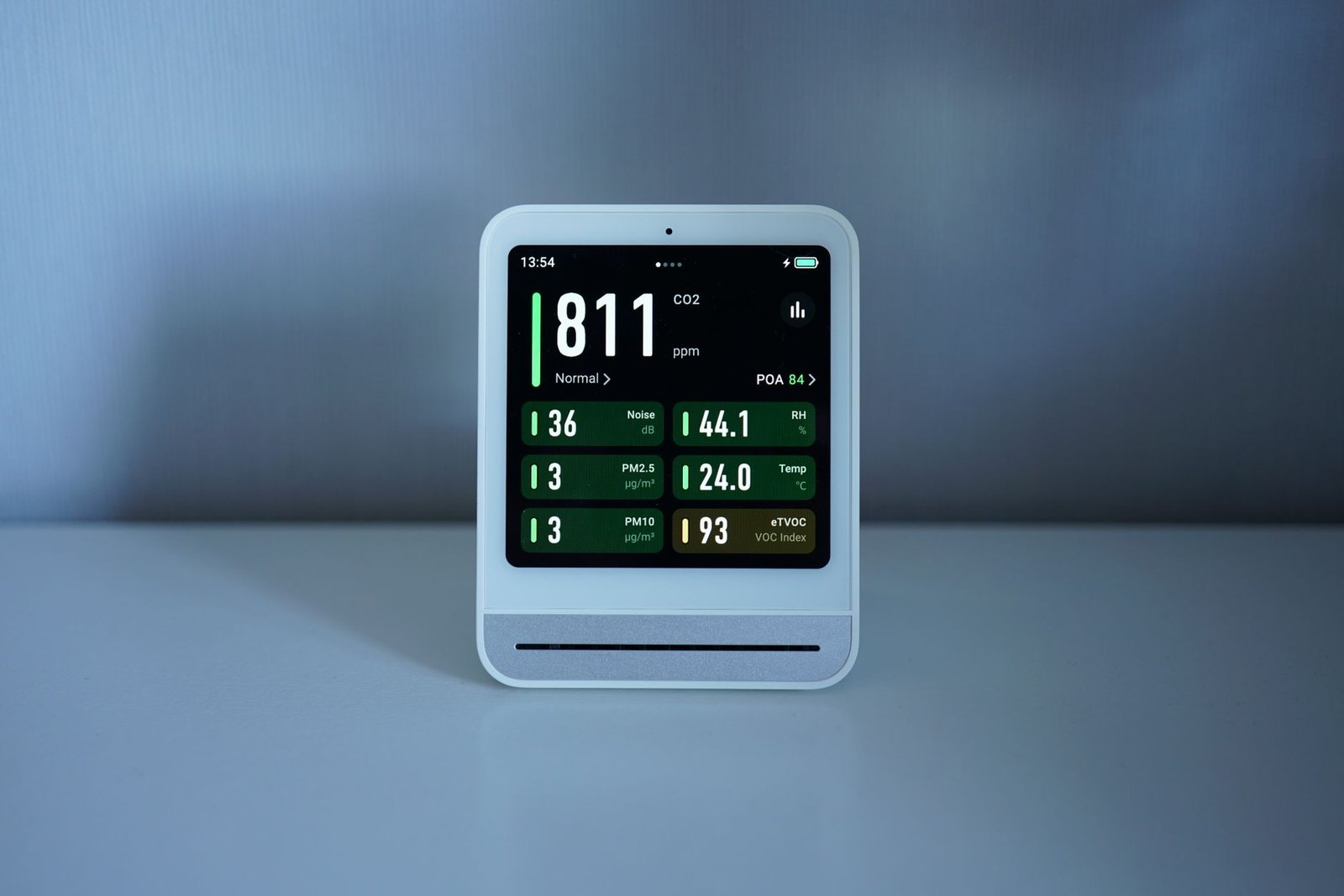
In 2026, the expenditure for a home air quality monitor typically spans from approximately $80 for foundational models to over $500 for sophisticated, multi-sensor systems. This broad range is primarily influenced by the device’s sensor sophistication, the extent of its connectivity features, and the specific spectrum of airborne pollutants it is designed to detect. Understanding these variations is crucial for residents seeking to enhance their indoor living environment.
Understanding Home Air Quality Monitoring in 2026
The imperative for maintaining superior indoor air quality (IAQ) has intensified significantly by 2026, reflecting a growing global awareness of environmental health and wellness. Home air quality monitors, once niche gadgets, have evolved into essential tools for proactive domestic comfort management. The shift towards greater residential energy efficiency, while beneficial, can inadvertently trap pollutants indoors, making real-time IAQ monitoring more critical than ever.
Modern monitors do more than just detect; they provide granular insights into the invisible elements within a home, including particulate matter (PM2.5), volatile organic compounds (VOCs), carbon dioxide (CO2), formaldehyde, and even radon. This comprehensive understanding empowers residents to make informed decisions regarding ventilation, purification, and overall indoor environment optimization, directly impacting health, comfort, and cognitive function.
The Evolving Landscape of IAQ Monitoring
The technological advancements in 2026 have made air quality monitoring more accessible and accurate. Devices now seamlessly integrate into smart home ecosystems, leveraging advanced micro-electromechanical systems (MEMS) sensors for enhanced detection of gases and refined laser-scattering technology for precise particulate matter measurement. This evolution ensures that even baseline monitors offer significant value, while premium models deliver near-laboratory-grade insights directly to the homeowner.
Cost Breakdown: Factors Influencing Home Air Quality Monitor Pricing
The investment required for a home air quality monitor is not monolithic; it is a direct reflection of several interlocking factors.
Sensor Technology and Accuracy
- Basic Sensors: Entry-level monitors typically feature sensors for common parameters such as PM2.5, temperature, and humidity. These often use electrochemical sensors for basic CO detection and NDIR (non-dispersive infrared) for CO2, offering sufficient accuracy for general awareness.
- Advanced Sensor Suites: Higher-priced units incorporate a more extensive array of sensors. This includes advanced VOC detection, precise formaldehyde sensors, and capabilities for radon or ozone monitoring. The accuracy and longevity of these sophisticated sensors, often employing improved optical or electrochemical methods, contribute significantly to the overall cost. Many premium 2026 models feature AI-driven algorithms that interpret sensor data to identify pollutant sources or predict air quality trends.
Connectivity and Smart Home Integration
- Local Connectivity: Monitors with only Bluetooth connectivity tend to be more affordable, providing data to a nearby smartphone or tablet.
- Wi-Fi Enabled: Devices featuring Wi-Fi command a higher price point due to their ability to facilitate remote monitoring, historical data logging, and seamless integration with broader smart home ecosystems (such as those utilizing Matter or Thread protocols). This connectivity allows for automated responses, like triggering an air purifier when pollutant levels rise.
Features, Design, and Materials
- Display Quality: The presence of a high-quality display (e.g., LED, LCD, or E-Ink for energy efficiency) adds to the cost.
- Portability and Battery Life: Monitors designed for portability with robust, long-lasting batteries or a sleek, minimalist aesthetic may also cost more.
- Integration Capabilities: Advanced models often integrate directly with home HVAC systems or smart air purifiers, enabling automated environmental adjustments.
- Sustainable Design Trends (2026): An increasing number of manufacturers are incorporating sustainable materials, such as recycled polymers and modular designs for easier repairability, which can influence pricing due to advanced manufacturing processes and material sourcing.
Brand Reputation and Warranty
Established brands with a history of research and development, robust customer support, and comprehensive warranties typically position their products at a higher price point. This premium often reflects a commitment to reliability, data accuracy, and ongoing software updates.
Monitor Categories and Expected Costs (2026 Pricing)
By categorizing monitors based on their capabilities, residents can align their budget with their specific IAQ monitoring requirements.
Entry-Level Monitors (Approx. $80 – $180)
These devices are an excellent starting point for general air quality awareness. They typically provide readings for PM2.5, temperature, and humidity, and sometimes include basic CO2 detection. Connectivity is often limited to Bluetooth, displaying data on a simple digital screen or a companion app when in close proximity. These are ideal for homeowners new to IAQ monitoring who seek fundamental insights without significant investment.
Mid-Range Monitors (Approx. $180 – $350)
Mid-range options offer a more comprehensive sensor suite, frequently including PM2.5, CO2, VOCs, temperature, and humidity, with some also detecting rudimentary formaldehyde levels. These devices almost invariably feature Wi-Fi connectivity, enabling remote monitoring, data logging, and customized alerts via dedicated smartphone applications. Improved sensor accuracy and more durable construction are characteristic, providing a solid balance between features and cost.
Advanced & Professional-Grade Monitors (Approx. $350 – $800+)
At the apex of the market, advanced monitors provide an exhaustive analysis of indoor air. They typically detect a wide array of pollutants, including PM2.5, CO2, VOCs, formaldehyde, radon, ozone, and nitrogen dioxide, often with near-laboratory precision. These systems offer seamless smart home integration, leveraging the latest Matter and Thread protocols for effortless connectivity with other smart devices. Advanced models boast sophisticated analytics, predictive modeling (often AI-powered to suggest corrective actions), and robust data visualization. They often feature multi-room monitoring capabilities and designs that blend durability with contemporary aesthetics, sometimes utilizing cutting-edge sustainable materials.
Emerging Technologies and Future Outlook
The IAQ monitoring sector continues its rapid innovation trajectory in 2026:
- AI and Machine Learning: Expect more monitors to incorporate AI for predictive insights, offering personalized recommendations for ventilation or purification based on learned patterns and external environmental data.
- Miniaturization and MEMS Sensors: The ongoing development of MEMS technology continues to reduce the size and cost of highly accurate gas sensors, facilitating more discreet and embeddable devices without compromising performance.
- Seamless Integration: With the maturation of protocols like Matter and Thread, true plug-and-play smart home ecosystems are becoming the norm, positioning air quality monitors as critical, passive data providers for a centralized home intelligence system.
- Sustainable Design: The emphasis on environmental responsibility means more devices will feature recycled materials, modular designs for enhanced repairability, and energy-efficient components as standard.
- Hyper-Personalization: Future devices will increasingly learn individual resident habits and specific environmental nuances to provide hyper-tailored advice and automated adjustments.
Making an Informed Purchase Decision
Selecting the right home air quality monitor involves a careful assessment of specific requirements and priorities:
- Identify Key Concerns: The resident should consider which pollutants are of greatest concern. For instance, radon detection is crucial in certain geographic areas, while VOCs may be a primary focus in newly furnished homes.
- Budget Allocation: Establish a realistic budget, acknowledging the direct correlation between cost and monitoring capabilities.
- Sensor Accuracy and Reliability: Prioritize monitors with independently verified sensor accuracy. Researching reviews and checking for industry certifications can provide valuable guidance.
- Connectivity Needs: Determine if remote monitoring and integration with existing smart home systems are essential for the household.
- Ease of Use and Data Interpretation: The device should offer an intuitive user interface and clear, actionable data interpretation to be truly beneficial.
- Longevity and Support: Consider the manufacturer’s warranty, customer support, and the likelihood of ongoing software updates for sustained performance.
By carefully evaluating these factors, residents can select an air quality monitor that not only fits their budget but also provides the necessary insights to foster a healthier, more comfortable indoor environment in 2026 and beyond.