Wicker vs. Aluminum Patio Furniture: Which Lasts Longer in 2026?
When considering outdoor furniture investments in 2026, the question of longevity frequently arises, especially concerning popular choices like wicker and aluminum. While both materials offer distinct advantages for enhancing outdoor living spaces, aluminum patio furniture generally exhibits superior inherent durability and weather resistance, leading to a longer lifespan under most conditions compared to even high-quality synthetic wicker. However, the ultimate longevity is profoundly influenced by material quality, manufacturing processes, maintenance practices, and environmental exposure.
For homeowners planning to invest in outdoor furnishings, understanding the nuances of these materials in the current year is crucial. This analysis delves into the advancements, characteristics, and comparative performance of wicker and aluminum patio furniture to guide a well-informed decision for enduring outdoor comfort and style.
Understanding Wicker Patio Furniture in 2026
The term ‘wicker’ traditionally referred to a weaving technique, but in the context of modern outdoor furniture, it predominantly signifies synthetic resin wicker. Natural wicker, derived from materials like rattan, bamboo, or willow, remains available but is largely relegated to covered or less exposed areas due to its vulnerability to elements.
Synthetic Wicker (Resin Wicker) Advancements
In 2026, synthetic wicker furniture is almost exclusively crafted from high-density polyethylene (HDPE), a significantly improved material compared to older PVC or polypropylene versions. Modern HDPE resin wicker boasts several key advancements:
- Enhanced UV Resistance: Manufacturers now incorporate advanced UV stabilizers directly into the resin, dramatically reducing fading, cracking, and brittleness over extended exposure to sunlight. This is a critical factor for longevity in harsh climates.
- Extreme Temperature Tolerance: Contemporary synthetic wicker is engineered to withstand wider temperature fluctuations without deforming or becoming brittle, making it suitable for diverse geographical locations.
- Mold and Mildew Inhibition: The non-porous nature of high-quality HDPE, often combined with antimicrobial treatments, naturally resists mold and mildew growth, which is a common issue with outdoor materials.
- Colorfastness: Pigments are saturated throughout the material, not just coated on the surface, ensuring colors remain vibrant for longer periods.
These developments mean that high-quality synthetic wicker furniture can offer a respectable lifespan, often ranging from 7 to 15 years, depending on the quality of the resin and the care provided.
Natural Wicker Considerations
While aesthetically charming, natural wicker demands considerable protection and maintenance. Its organic fibers are highly susceptible to moisture, leading to rot, mold, and mildew, and prolonged sun exposure can cause drying and cracking. For those drawn to its authentic look, covered patios or sunrooms are the most suitable placements, with diligent cleaning and sealing required to maximize its short outdoor lifespan.
Wicker’s Aesthetic Appeal
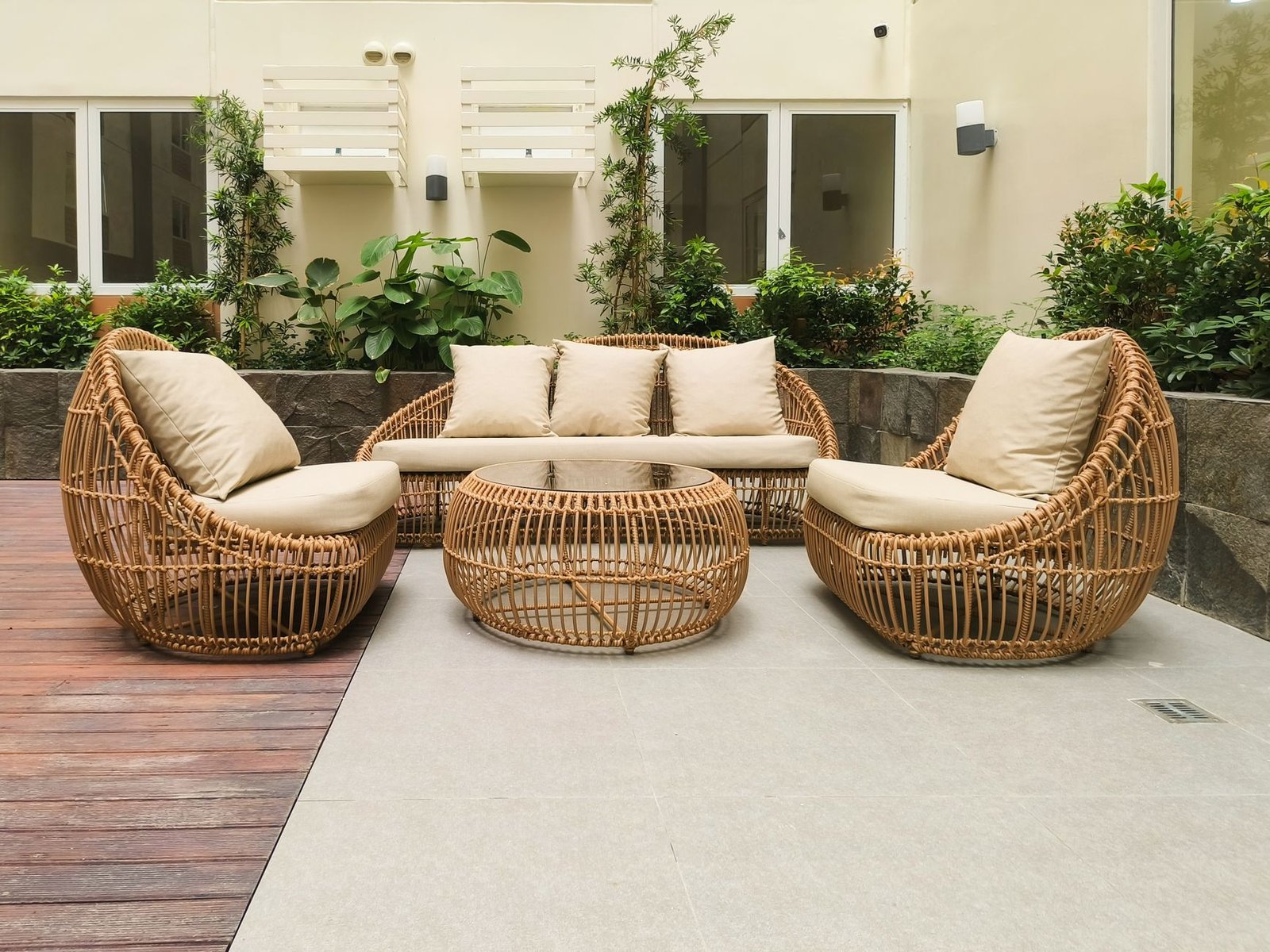
Wicker furniture, whether natural or synthetic, brings a classic, organic texture and a sense of inviting comfort to outdoor spaces. In 2026, trends lean towards larger, more substantial weaves, often in sophisticated neutrals, mixed with industrial elements for a contemporary twist. Its inherent ability to create cozy, conversational zones makes it a perennial favorite for residential settings focused on relaxation and hospitality.
Exploring Aluminum Patio Furniture in 2026
Aluminum has long been a staple in outdoor furniture due to its inherent properties. Its evolution in manufacturing and finishing techniques in 2026 further solidifies its position as a top contender for durability.
Powder-Coated Aluminum Innovations
The vast majority of aluminum outdoor furniture available today is powder-coated, a finishing process that significantly enhances its protective qualities and aesthetic:
- Superior Corrosion Resistance: Aluminum itself is naturally rust-resistant because it forms a passive oxide layer. Powder coating adds an extra, incredibly durable barrier against moisture, salt air, and other corrosive elements, making it ideal for coastal regions.
- Scratch and Chip Resistance: Modern powder coatings are engineered for increased resilience, offering better protection against scratches, chipping, and fading compared to traditional liquid paints. Electrostatic application ensures a uniform, thick coating.
- Advanced Textures and Finishes: Beyond smooth finishes, 2026 sees an expansion in textured, matte, and even wood-grain effect powder coatings, providing diverse aesthetic options that mimic other materials while retaining aluminum’s core benefits.
Recycled and Sustainable Aluminum Trends
A significant trend in 2026 is the increasing use of recycled aluminum. This move aligns with growing consumer demand for sustainable products and contributes to a circular economy, as aluminum is infinitely recyclable without loss of quality. This commitment to eco-conscious manufacturing adds another layer of appeal for environmentally aware homeowners.
Aluminum’s Modern Aesthetics
Aluminum furniture is synonymous with sleek, modern, and minimalist design. Its ability to be cast, extruded, and welded into intricate yet robust forms allows for highly contemporary silhouettes. In 2026, designs often feature clean lines, geometric shapes, and a palette of sophisticated dark grays, blacks, and metallics, frequently paired with teak or composite accents for added warmth. Integrated smart technology, such as discreet lighting or charging ports, is also becoming more prevalent in high-end aluminum pieces.
Durability, Maintenance, and Aesthetic: A Direct Comparison
A direct comparison helps illuminate the strengths of each material when making a long-term investment.
Longevity and Durability
- Aluminum: With proper powder coating, aluminum is virtually impervious to rust, rot, and insect damage. Its structural integrity remains robust over decades. High-quality aluminum furniture can easily last 20-30 years or more, making it a multi-generational investment. Damage is typically limited to scratches on the coating, which can often be touched up.
- Wicker (Synthetic): While significantly improved, even the best synthetic wicker will eventually show signs of wear from prolonged UV exposure, such as some fading, minor surface cracking, or loosening of weaves. Its typical lifespan of 7-15 years, though respectable, falls short of aluminum’s potential. Natural wicker is far less durable outdoors.
Maintenance Requirements
- Aluminum: Requires minimal maintenance. A simple wash with mild soap and water is usually sufficient to remove dirt and grime. No special treatments, sealing, or rust prevention are necessary. This low-fuss nature is a key appeal for many homeowners.
- Wicker (Synthetic): Also relatively low maintenance, requiring regular cleaning with mild soap and water to clear debris from its woven surfaces. While resistant to mold, occasional deeper cleaning might be needed, and cushions (often paired with wicker) will require separate care and storage. The intricate weave can sometimes trap dirt more effectively.
Design Versatility and Trends
- Aluminum: Offers unparalleled versatility for modern and contemporary aesthetics. Its ability to be molded allows for innovative designs, from minimalist benches to elaborate dining sets. The 2026 trend towards indoor-outdoor seamless living often sees aluminum’s clean lines extending from interior decor.
- Wicker (Synthetic): Excels in creating a comfortable, traditional, or bohemian vibe. Its textures add warmth and an organic feel, making it suitable for resort-style or relaxed living spaces. The current year sees it integrating with more industrial or metallic frames to broaden its stylistic appeal.
Cost-Benefit Analysis
Generally, both high-quality synthetic wicker and aluminum furniture represent a significant initial investment. However, considering the longevity:
- Aluminum: While often having a higher upfront cost, its exceptional durability and minimal maintenance mean a lower cost of ownership over its extended lifespan. It holds its value well and requires fewer replacements.
- Wicker (Synthetic): May sometimes be slightly less expensive upfront than premium aluminum, but its shorter lifespan could necessitate replacement sooner, leading to a higher long-term cost if opting for frequent upgrades.
Making the Informed Choice for 2026
For the homeowner prioritizing ultimate longevity, minimal upkeep, and a sleek, modern aesthetic that will endure for decades, aluminum patio furniture remains the superior choice in 2026. Its robust nature, rust-proof properties, and advanced powder coatings make it an exceptionally durable and low-maintenance investment, particularly in challenging climates or for those seeking true set-it-and-forget-it outdoor solutions.
Conversely, for individuals who highly value an organic, textured aesthetic, a cozy ambiance, and are content with a somewhat shorter lifespan or more focused maintenance, high-quality synthetic wicker offers an excellent blend of style and practicality. It shines in creating inviting, comfortable outdoor rooms.
Ultimately, the best decision hinges on balancing individual priorities regarding durability expectations, maintenance commitment, desired aesthetic, and budgetary considerations. Regardless of the material chosen, investing in high-quality construction from reputable manufacturers ensures that the outdoor furniture will provide years of enjoyment and enhance the outdoor living experience for the resident.