
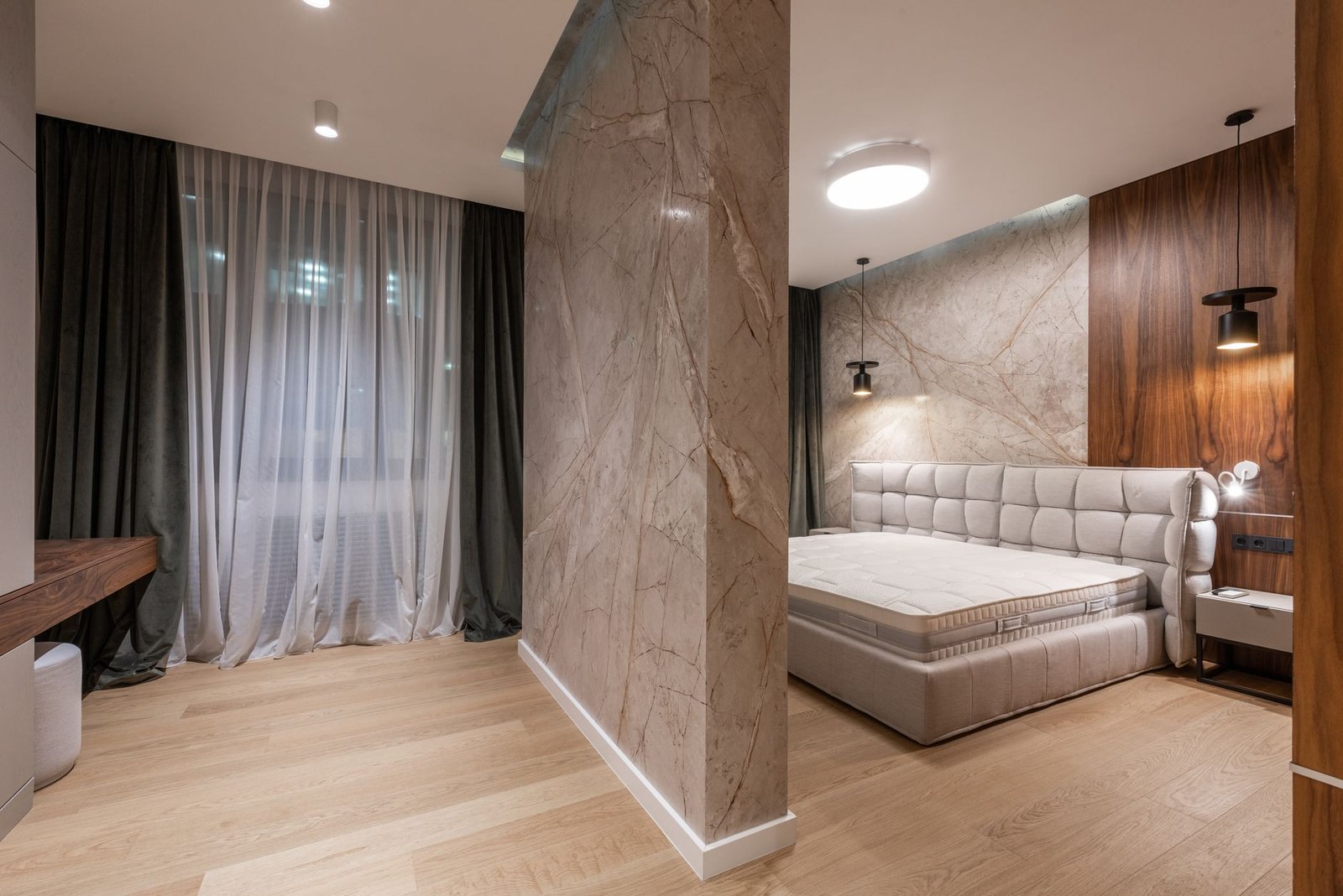
A dark bedroom can indeed feel confining and visually smaller, impacting both mood and perceived spaciousness. However, with strategic interior design principles, it is entirely possible to visually expand and brighten such a space, transforming it into an airy and inviting sanctuary. This article explores seven effective design tricks, incorporating modern materials and trends from 2026, to make any dark bedroom feel significantly lighter and larger.
Harnessing the Power of Light: Illumination & Reflection
1. Lighter Hues & Reflective Finishes: The Foundation of Brightness
The immediate impact of color on a room’s perceived size and brightness cannot be overstated. For a dark bedroom, selecting light, cool-toned paints is paramount. Shades of off-white, soft grey, pale blue, or muted mint green can immediately make walls recede, enhancing the feeling of openness. In 2026, advances in paint technology include ultra-reflective, low-VOC finishes designed to bounce available light more effectively without creating glare. Consider a soft, matte finish for walls to diffuse light gently, while a slightly higher sheen on trim or the ceiling can add a subtle reflective quality. An often-overlooked trick is painting the ceiling a shade lighter than the walls, or even a very pale sky blue, to draw the eye upward and mimic natural light.
2. Layered Lighting & Smart Illumination: Beyond the Overhead Glow
Reliance on a single overhead light fixture is a common pitfall in dark bedrooms. The solution lies in creating a layered lighting scheme that incorporates ambient, task, and accent lighting. Ambient light, often from recessed fixtures or diffused ceiling lights, establishes the room’s overall brightness. For 2026, smart LED systems offer tunable white light, allowing the resident to adjust color temperature from warm to cool to simulate natural daylight cycles, positively influencing domestic comfort. Task lighting, such as bedside lamps or reading sconces, should be functional yet stylish. Accent lighting, like discreet LED strips behind headboards or along crown molding (cove lighting), adds depth and highlights architectural features, preventing shadows that make a room feel smaller. Integrating smart home technology allows for intuitive control and pre-set scenes, optimizing illumination throughout the day.
3. Strategic Mirror Placement: Illusion of Depth and Light
Mirrors are a designer’s secret weapon for expanding space and amplifying light. Placing a large mirror opposite a window is one of the most effective strategies, as it reflects natural light deeper into the room and creates the illusion of an additional window. A full-length mirror leaning against a wall can add visual height, while a gallery of smaller, strategically placed mirrors can create interesting reflections without overpowering the space. In 2026, options include frameless mirrors with integrated LED backlighting, which provide a soft glow and further enhance the brightness effect. Mirrored furniture, such as a bedside table or dresser, also contributes to this reflective strategy, adding a touch of modern glamour while serving a practical purpose.
Strategic Color and Material Choices for Expansion
4. Window Treatments: Maximizing Natural Light Influx
The way windows are dressed significantly impacts the amount of natural light entering a bedroom. Heavy, dark drapes can block precious daylight. Opt instead for light-filtering window treatments that allow light to penetrate while maintaining privacy. Sheer linen curtains, cellular shades, or minimalist Roman blinds in light, neutral colors are excellent choices. Mounting curtain rods wider and higher than the window frame allows curtains to be pulled completely clear of the glass, maximizing the visible window area and drawing the eye upwards. For automated domestic comfort, smart shades are a popular 2026 trend, allowing the resident to program them to open and close with sunrise and sunset, or adjust based on external light levels, ensuring optimal natural light throughout the day.
5. Light-Enhancing Textiles & Decor: Subtlety and Texture
Beyond walls and windows, the choice of textiles and decorative elements plays a crucial role. Opt for bedding, throws, and rugs in light colors and materials with a subtle sheen or interesting texture. Silks, sateens, and lightweight cotton can reflect light more effectively than heavy, matte fabrics. Incorporating metallic accents, such as silver or brass decorative objects, light-colored ceramic vases, or glass elements, can catch and scatter light around the room. Even small details, like a light-colored rug, can visually expand the floor space and tie the room together. The trend for 2026 emphasizes natural textures and sustainable materials, so look for organic cotton, bamboo, or recycled textiles in light, calming palettes.
Furniture Placement and Innovative Storage Solutions
6. Furniture: Scale, Transparency, and Minimalist Designs
In a small, dark bedroom, bulky, dark furniture can exacerbate the feeling of confinement. The homeowner should select pieces that are appropriately scaled for the room and ideally feature light finishes or transparent materials. Low-profile beds and furniture with exposed legs create an airy feel, allowing the eye to see more of the floor. Floating shelves instead of traditional bookcases also contribute to this effect. Materials like acrylic, glass, or light-toned wood with minimalist designs are excellent choices for 2026. Multi-functional furniture, such as an ottoman with built-in storage or a wall-mounted desk, further reduces clutter and optimizes space. The goal is to minimize visual bulk and create clear sightlines.
7. Vertical Space Utilization & Decluttering: Order for Openness
Clutter can make any room feel smaller and more chaotic, especially in a dark space. A thorough decluttering is the essential first step. Once organized, focus on utilizing vertical space effectively. Tall, narrow bookcases or wall-mounted shelving units draw the eye upward and keep floor space clear. Built-in storage solutions, such as custom wardrobes or integrated bed frames with drawers, offer seamless organization. Smart storage containers in light colors also help maintain an uncluttered aesthetic. By moving items off the floor and into organized vertical systems, the resident creates a greater sense of openness and order, contributing significantly to a brighter, larger-feeling bedroom. Contemporary 2026 designs often feature integrated, sleek storage that blends seamlessly into the architecture, maintaining clean lines and a minimalist aesthetic.
Transforming a dark, small bedroom into a luminous and expansive retreat is an achievable goal with thoughtful design. By strategically employing lighter colors, optimizing illumination, utilizing reflective surfaces, selecting appropriate window treatments and textiles, choosing scaled and transparent furniture, and embracing smart storage and decluttering, homeowners can significantly enhance the domestic comfort and visual appeal of their sleeping quarters. These 2026-informed design tricks offer actionable pathways to create a bedroom that feels both lighter and larger, fostering a serene and spacious environment for rest and relaxation.