
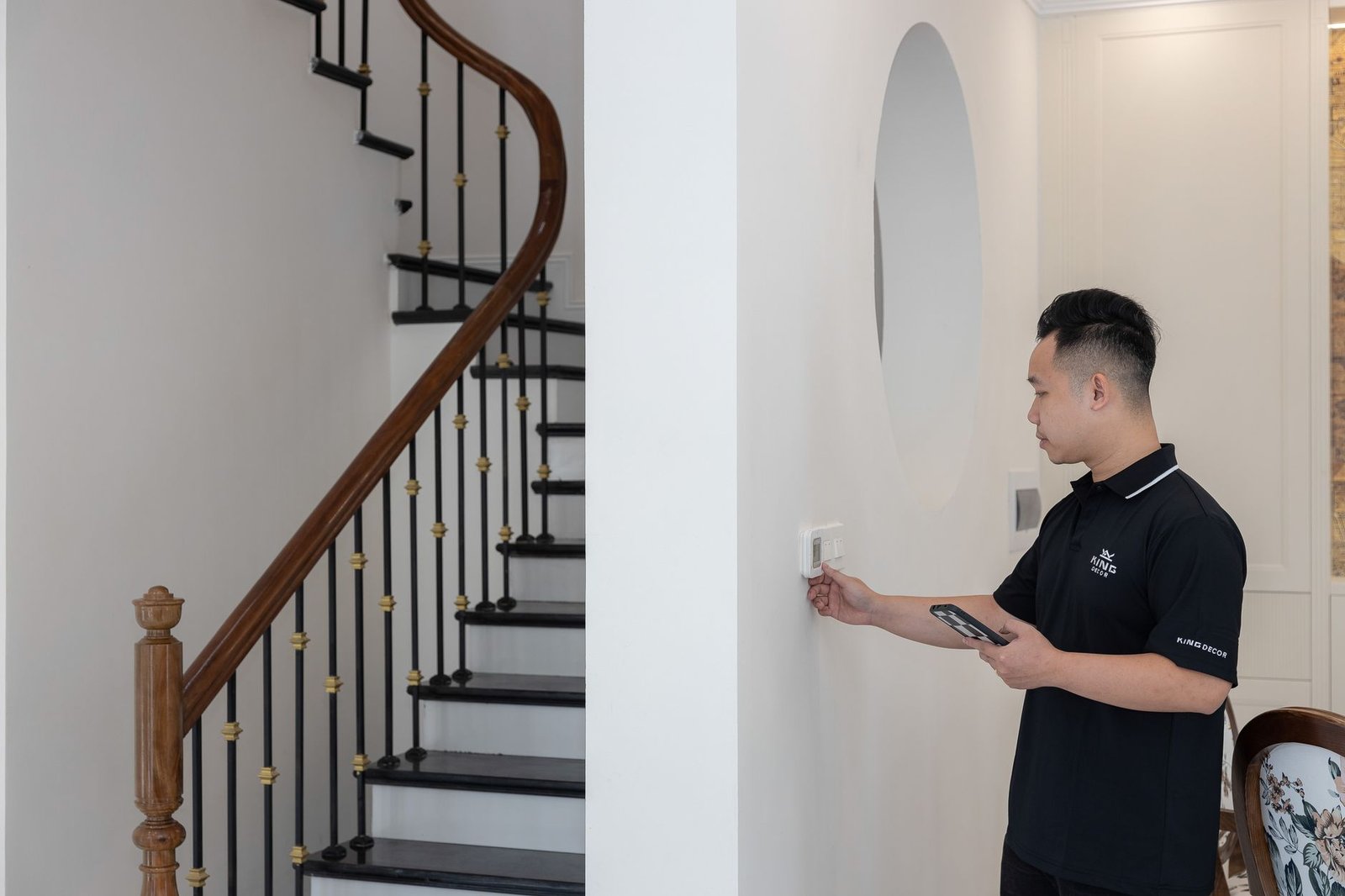
In 2026, homeowners seeking to optimize domestic comfort and reduce utility expenses often face a critical decision: should investment be prioritized in a smart thermostat or smart vents? While both technologies promise significant energy savings through intelligent climate control, their approaches and efficacy differ based on a home’s specific characteristics. Generally, a smart thermostat offers broad, foundational savings across an entire dwelling, while smart vents provide granular, zone-specific optimization, often yielding more substantial incremental savings in homes with diverse heating and cooling needs or irregular occupancy.
The Evolution of Smart Thermostats in 2026
Core Functionality and Energy-Saving Mechanisms
Smart thermostats serve as the central command unit for a home’s HVAC system, learning occupancy patterns and adjusting temperatures automatically. Their primary energy-saving mechanisms include programmable scheduling, geofencing (adjusting temperature based on a resident’s proximity), and occupancy sensing to avoid conditioning empty spaces. By preventing unnecessary heating or cooling, these devices lay the groundwork for a more energy-efficient household.
2026 Industry Trends and Technological Advancements
By 2026, smart thermostats have become highly sophisticated. AI integration is standard, enabling predictive analytics that leverage hyper-local weather forecasts, grid demand fluctuations, and even individual appliance energy consumption data to optimize HVAC operation proactively. This allows for ‘pre-cooling’ or ‘pre-heating’ during off-peak energy hours, minimizing costly peak-time usage. Enhanced interoperability, often facilitated by Matter 1.3+ protocols, ensures seamless communication with other smart home devices, creating a more cohesive energy management ecosystem. New sensors, often discreetly integrated into various home devices, provide more accurate room-level temperature and humidity readings to the thermostat, overcoming its traditional limitation of being a single-point sensor.
Installation Complexity and Cost-Effectiveness
Installation of a standard smart thermostat remains relatively straightforward, often a DIY task for those comfortable with basic electrical wiring, or a quick job for a professional. For multi-zone systems or integrations with complex HVAC setups, professional installation is recommended. The initial investment for a high-quality smart thermostat typically ranges from $150 to $400. The return on investment (ROI) is generally rapid, with many homeowners reporting 10-20% savings on heating and cooling costs annually, making them a foundational energy-saving upgrade.
Smart Vents: Precision Climate Control in 2026
Core Functionality and Energy-Saving Mechanisms
Smart vents operate by physically opening and closing to regulate airflow into individual rooms or zones. When integrated with a central thermostat, they allow for dynamic zoning within a single HVAC system. Their main energy-saving potential lies in redirecting conditioned air only to occupied spaces, preventing the waste of heating or cooling in unused rooms. This granular control means a guest bedroom can be maintained at a lower temperature until occupied, or a sun-drenched living room can receive more cooling without over-cooling other areas.
2026 Industry Trends and Technological Advancements
In 2026, smart vents have evolved significantly beyond simple open/close mechanisms. They now feature advanced sensor arrays that monitor not only temperature but also humidity, occupancy, and even air quality at the room level. High-efficiency micro-actuators ensure whisper-quiet operation and precise airflow modulation. Many modern smart vents incorporate self-powering capabilities through thermal or kinetic energy harvesting, reducing the reliance on battery changes. Enhanced mesh networking protocols, such as Thread and Wi-Fi 7 compatibility, ensure robust and responsive communication across multiple units. New composite materials, including aerogel-infused polymers, are used in vent construction to improve insulation and virtually eliminate air leakage, maximizing efficiency. Integration with smart air purification systems is also common, allowing for targeted filtration based on room-specific air quality metrics.
Installation Complexity and Cost-Effectiveness
Installing smart vents is generally more involved than a single smart thermostat. It typically requires replacing existing vents in multiple rooms and often involves a central hub for coordination. Calibration and integration with the existing HVAC system can also add complexity, often necessitating professional installation for optimal performance. The per-unit cost for smart vents usually ranges from $80 to $200, meaning a whole-home setup can easily incur an initial investment of $500 to $2000 or more. The ROI is highly dependent on the homeowner’s ability to capitalize on zone-specific savings, particularly in homes with significant temperature disparities or variable occupancy patterns.
Smart Thermostat vs. Smart Vents: A Direct Comparison for 2026
Energy-Saving Potential: Which Yields More?
Determining which technology saves more energy ultimately depends on the specific dwelling and user habits. A smart thermostat provides foundational savings by optimizing the overall HVAC schedule and operation. It excels in homes with relatively consistent temperature needs across all rooms, or where the primary goal is broad energy reduction based on general occupancy patterns. The savings are consistent and relatively easy to achieve.
Smart vents offer a higher potential for incremental savings in homes that struggle with uneven temperatures, have frequently unoccupied rooms, or experience significant solar gain differences. By preventing the over-conditioning of unused or naturally warmer/cooler areas, smart vents can precisely target energy expenditure. For example, in a two-story home where the upper floor is consistently warmer in summer, smart vents can direct more cooling to that area without excessively chilling the lower floor, leading to substantial gains in efficiency and comfort.
In 2026, the maximum energy savings are often achieved when both technologies are deployed in synergy. A smart thermostat sets the optimal baseline for the entire home, while smart vents refine that control at the room level. This combined approach allows the central HVAC unit to operate more efficiently for shorter durations, directing its output precisely where needed, avoiding energy waste inherent in single-zone systems.
Installation and Integration Complexity
- Smart Thermostat: Installation typically involves simple wiring replacement at the existing thermostat location. Advanced models may require C-wire installation or adapter kits, but generally, the process is contained to a single point.
- Smart Vents: Installation is more distributed, requiring the replacement of multiple existing vents. This can be more time-consuming and may involve adjusting HVAC ductwork pressure balancing, which some advanced systems handle automatically. Integration with the central HVAC system and the smart thermostat is critical for optimal performance, potentially requiring a dedicated smart home hub.
Overall Cost-Effectiveness and Return on Investment (ROI)
The cost-effectiveness analysis for 2026 reveals distinct scenarios:
- For foundational savings: A smart thermostat represents an excellent initial investment with a generally quick ROI due to its lower upfront cost and broad impact on energy consumption. It is the recommended starting point for most homeowners.
- For optimized, granular savings: Smart vents, while requiring a higher initial outlay, can deliver a superior ROI in specific situations. Homes with significant temperature imbalances, multiple unused rooms, or complex occupancy schedules will see the greatest benefit. For these properties, the ability to eliminate conditioning in specific zones can lead to energy savings that quickly justify the higher investment.
- For maximum efficiency: The combined deployment of both systems offers the most comprehensive climate control and potential for energy savings. While the initial capital expenditure is highest, the long-term operational cost reductions can be profound, especially as energy prices continue their upward trend.
Conclusion: Tailoring the Solution to the Home
In conclusion, for homeowners in 2026 evaluating smart climate control options, the choice between a smart thermostat and smart vents is not a simple either/or proposition, but rather a strategic decision based on a home’s specific needs and characteristics. A smart thermostat provides an essential, broad-stroke solution, offering substantial foundational energy savings with relatively low installation complexity and cost. Its advancements in AI and interoperability make it a powerful central controller for an efficient home.
Conversely, smart vents offer unparalleled precision, enabling room-by-room optimization and targeting energy waste in specific zones. For properties with inherent temperature disparities, varied occupancy, or unique heating/cooling challenges, the higher initial investment in smart vents can lead to superior, granular savings and enhanced comfort. The integration of advanced sensors and self-powering capabilities in 2026 further solidifies their role in sophisticated home climate management.
Ultimately, while a smart thermostat is typically the first step toward a more energy-efficient home, the most profound and tailored energy savings in 2026 are often realized through the synergistic deployment of both smart thermostats and smart vents. This integrated approach allows for both whole-house optimization and precision zoning, delivering maximum comfort and substantial reductions in energy expenditures for the discerning resident.