The relentless tide of children’s toys can quickly transform a vibrant playroom into an overwhelming sea of clutter. For homeowners seeking to reclaim order and foster a more functional, aesthetically pleasing environment, clever storage solutions are paramount. This article explores seven innovative storage hacks specifically designed to manage children’s toys effectively, ensuring a clutter-free and highly functional playroom in 2026.
The Modern Playroom Challenge: Conquering Clutter in 2026
The modern playroom in 2026 presents unique organizational challenges. Children’s engagement with toys has evolved, incorporating more interactive, digital, and often larger items alongside traditional playthings. This necessitates a storage strategy that is dynamic, adaptable, and forward-thinking. Residents often find themselves grappling with limited space, a desire for sustainable practices, and the need for systems that can evolve as children grow. The goal is to create a space that encourages play and learning without succumbing to disarray, enhancing overall domestic comfort.
The Evolving Landscape of Children’s Play
Today’s play environments are dynamic hubs of activity, encompassing everything from advanced robotics and virtual reality headsets to classic building blocks and art supplies. This diverse array demands a storage approach that is not only robust but also intuitive. The focus shifts from merely containing toys to creating systems that promote independent organization for children and simplify maintenance for the resident. Integrating modern material science and smart home technology offers unprecedented opportunities to achieve this.
7 Clever Storage Hacks for a Clutter-Free Playroom
-
Smart, Modular Storage Systems
In 2026, modular storage has moved beyond simple bins. Advanced systems feature interlocking components crafted from lightweight, recycled bioplastics or bamboo composites, allowing for effortless reconfiguration. These units often integrate smart sensors that can track inventory or even suggest decluttering based on play patterns. The resident can customize height, depth, and compartment sizes to perfectly fit various toy categories, from oversized building blocks to delicate figurines, maximizing vertical and horizontal space efficiency.
-
Vertical Ascent: Wall-Mounted & Elevated Solutions
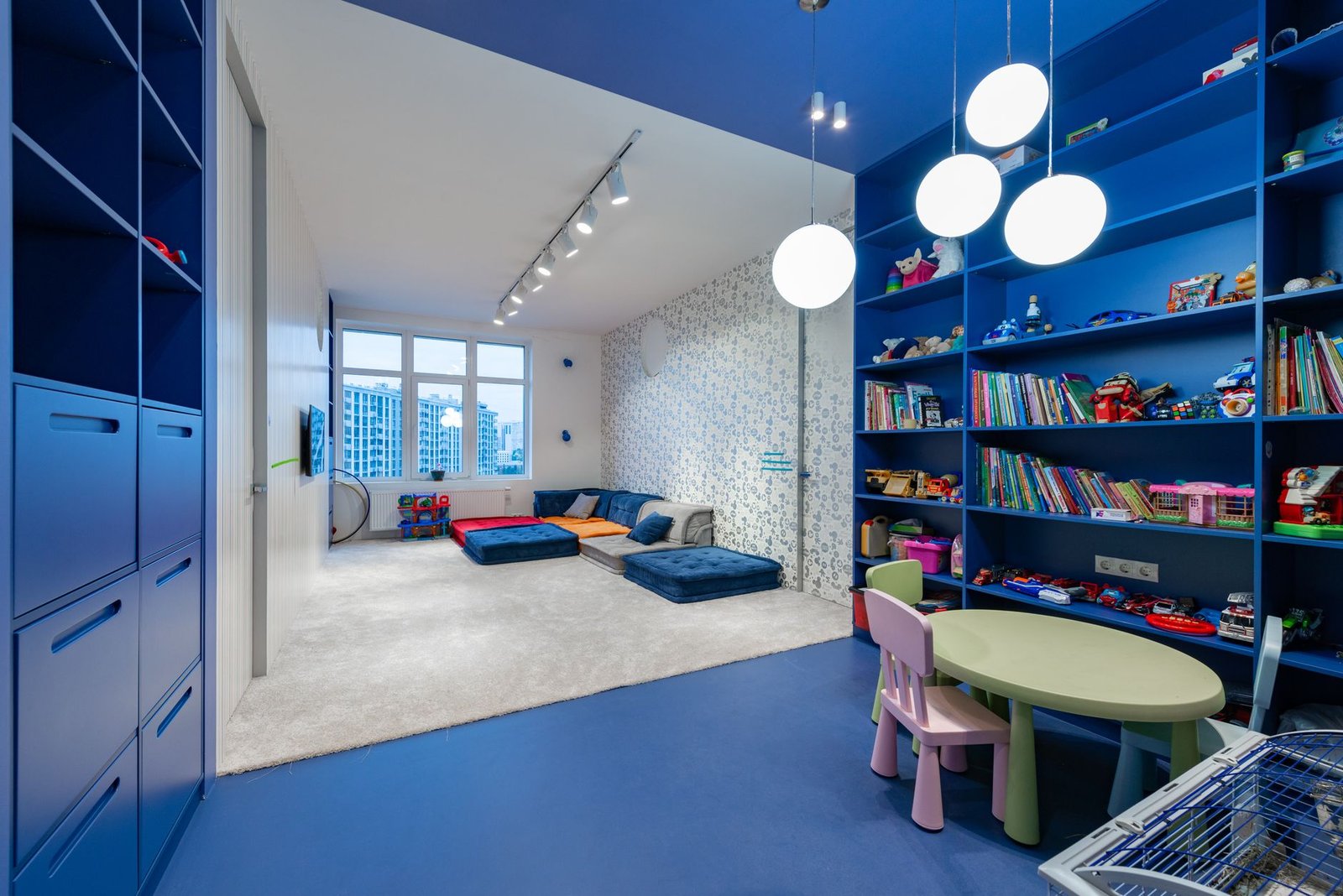
Utilizing vertical space is a cornerstone of effective playroom organization. Wall-mounted shelving, often featuring integrated magnetic strips for metal toys or transparent acrylic fronts for visibility, keeps items off the floor. Elevated storage platforms or custom-built lofts with integrated pull-out drawers provide substantial capacity for larger items or seasonal rotations, making them accessible yet out of the way. Modern systems often incorporate touch-activated lowering mechanisms for higher shelves, ensuring safety and accessibility for children.
-
Integrated Multi-Functional Furniture
The design philosophy of 2026 prioritizes multi-functional pieces. Ottomans that open to reveal deep storage, benches with built-in drawers, and beds featuring under-frame compartments are becoming standard. Even play tables now frequently incorporate hidden pull-out bins or integrated smart charging stations for electronic toys, seamlessly blending utility with aesthetics. Selecting pieces with clean lines and durable, easy-to-clean surfaces, such as those made with stain-resistant nanocoatings, contributes to a polished look.
-
Zoned Play & Designated Homes
Implementing distinct zones within the playroom helps children understand where specific types of toys belong. A reading nook might have shelves for books and quiet games, while a building zone features open bins for blocks and construction sets. Each zone is equipped with storage tailored to its function, simplifying the clean-up process. Labelling bins with clear, image-based tags or smart displays that show contents helps younger children return items to their “home.”
-
Digital Inventory & RFID Integration
For the digitally-savvy home of 2026, technology assists with toy management. RFID tags, small and inexpensive, can be attached to toy collections. A simple scan or an integrated RFID reader in a storage unit can instantly update a digital inventory, helping the resident track what is owned, identify missing pieces, and even suggest items for donation or rotation. This system streamlines decision-making during decluttering and ensures maximum utility from every item.
-
Sustainable & Smart Material Bins
Beyond traditional plastic, storage bins in 2026 are often made from sustainable, durable materials. Options include woven seagrass, recycled felt, organic cotton canvas with biopolymer stiffeners, or lightweight, impact-resistant bioplastics derived from renewable resources. Many feature antimicrobial treatments and easy-clean surfaces, maintaining hygiene. Transparent containers, especially those made from recycled PET, allow for quick visual identification of contents, reducing time spent searching.
-
The Rotating Toy Library Concept
To combat toy fatigue and perpetual clutter, the rotating toy library concept encourages storing a portion of toys out of sight and introducing them into the main playroom on a schedule. This keeps play fresh and prevents overwhelming the space. Secure, climate-controlled off-site or dedicated attic/basement storage solutions, managed with the digital inventory system, facilitate this rotation without adding to the immediate playroom burden. This practice also reinforces the value of each item as it reappears.
Maintaining the Clutter-Free Sanctuary
Achieving a clutter-free playroom is only half the battle; maintaining its order requires consistent effort and smart strategies. By embedding organization into daily routines and empowering children, the playroom can remain a sanctuary of play rather than a source of stress.
Implementing a Regular Decluttering Protocol
Sustaining a clutter-free playroom requires consistent effort. A weekly or bi-weekly 15-minute “reset” where all items are returned to their designated homes can prevent accumulation. Quarterly deep decluttering sessions, guided by the “one-in, one-out” rule, help manage the influx of new toys. The resident should involve children in this process to foster a sense of responsibility and ownership over their play environment.
Empowering Independent Organization
Designing the playroom with children’s capabilities in mind is crucial for long-term success. Low, accessible storage for frequently used items, clearly labeled bins, and simple, intuitive systems enable children to put away their toys independently. This not only reduces the workload for the resident but also teaches valuable life skills in organization and responsibility.
Achieving a clutter-free and functional playroom in 2026 is an attainable goal with the right strategies and modern solutions. By embracing smart, modular systems, utilizing vertical space, integrating multi-functional furniture, and leveraging technological advancements, homeowners can create an environment that supports creative play and domestic serenity. These clever hacks transform the challenge of toy management into an opportunity for innovative and sustainable home organization, ensuring the playroom remains a cherished space for growth and imagination.