
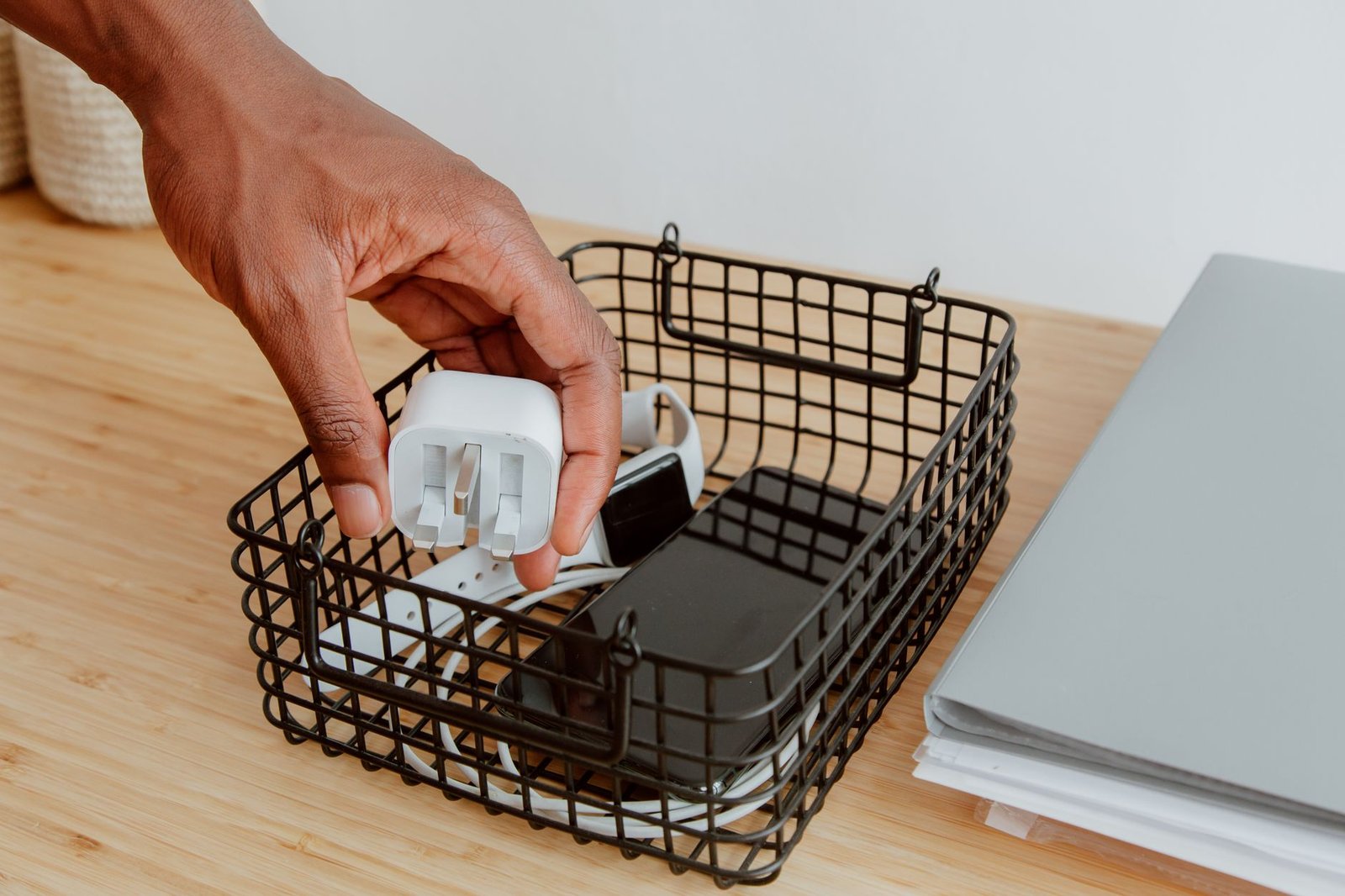
Is a chaotic tangle of cables undermining the efficiency and aesthetics of a home office? For 2026, the pervasive issue of cable clutter, which often detracts from an otherwise organized workspace, has simple, effective solutions available to homeowners. Addressing this visual and functional hindrance improves both the productivity and the overall domestic comfort of the resident’s dedicated work area.
The Persistent Problem of Digital Tangents
In the contemporary home office, the proliferation of devices—monitors, laptops, docking stations, peripherals, and charging units—inevitably leads to a spaghetti junction of wires. This unsightly mess not only creates a visual distraction but can also become a dust trap, a tripping hazard, and a source of unnecessary stress. A cluttered environment is scientifically proven to impact focus and reduce overall well-being. Modern interior design principles increasingly emphasize minimalist aesthetics and seamless technology integration, making effective cable management a crucial component of a high-quality living and working space.
Solution 1: Integrated Furniture and Smart Desks
Embracing the Future of Workspace Design
The year 2026 brings an array of furniture designed with inherent cable management in mind. Integrated furniture solutions are no longer a luxury but an expectation for an optimized home office. Desks feature built-in cable trays, channels, and discreet compartments that allow for wires to be routed cleanly from their source to the device. Many models now include wireless charging pads, often supporting advanced Qi2 or equivalent standards, seamlessly embedded into the desktop surface, drastically reducing the need for device charging cables. Material trends favor sustainable options, with recycled plastics and responsibly sourced wood composites forming the backbone of these ergonomic and aesthetically pleasing designs. The homeowner benefits from a workspace where technology is functional yet virtually invisible.
Solution 2: Advanced Cable Management Systems
Beyond Basic Ties: Intelligent Organization for 2026
Moving beyond rudimentary zip ties, 2026 offers sophisticated cable management systems designed for both efficiency and appearance. Modular cable raceways, often self-adhesive and paintable, allow for cables to be neatly tucked away along walls or under desks, providing a clean line that blends with the room’s décor. Magnetic cable clips offer flexible attachment points for individual wires, securing them to desk edges or metal surfaces with ease, facilitating quick changes when needed. For bundling multiple cables, smart cable sleeves crafted from advanced, eco-friendly polymers are available. These expandable, braided sleeves not only consolidate wires but also offer protection and an improved aesthetic. Under-desk cable management trays, fabricated from durable mesh, metal, or high-grade recycled plastic, provide a robust platform for power strips, excess cable lengths, and power adapters, keeping them completely out of sight and off the floor.
Solution 3: Wireless Power and Connectivity
Cutting the Cords: The 2026 Wireless Revolution
The trajectory towards a truly wireless home office continues strongly into 2026. Significant advancements in wireless charging technologies mean more devices can be powered without direct cable connections. Desktop and furniture-integrated pads now support faster charging for multiple devices simultaneously, reducing the sheer number of charging bricks and associated wires. Connectivity too is evolving; with widespread adoption of Wi-Fi 7 and emerging standards, the reliance on physical Ethernet cables for high-speed internet is diminishing for many users, particularly for non-stationary devices. Furthermore, Bluetooth 6.0 and subsequent iterations provide more stable and faster connections for peripherals like keyboards, mice, and headsets. For specific networking needs, Power-over-Ethernet (PoE) technology is increasingly integrated into smart office devices such as cameras and VoIP phones, allowing both power and data to run through a single Ethernet cable, thereby eliminating a dedicated power cord.
Solution 4: Strategic Placement and Concealment
Mastering the Art of Subtlety
Clever placement and concealment are fundamental to a clutter-free environment. Utilizing existing furniture to hide unsightly power strips, routers, and modems is an effective strategy. For instance, placing these items behind a monitor, inside a desk drawer, or within a cabinet can make a dramatic difference. Wall-mounted media consoles and shelving units often come equipped with integrated cable cutouts and hidden channels to route television and audio cables discreetly. Furthermore, specialized cable management boxes, crafted from aesthetically pleasing and often fire-resistant materials, provide a neat enclosure for power strips and adapter bricks, preventing dust accumulation and presenting a clean façade. For cables that must run along walls, adhesive cable clips or channels can secure them along baseboards or behind furniture, rendering them almost invisible to the casual observer.
Solution 5: Labeling and Bundling for Clarity
Simplifying Maintenance and Troubleshooting
An often-overlooked but highly effective strategy for long-term cable management is precise labeling and intelligent bundling. The homeowner should employ clear, durable labels on both ends of each cable, identifying its purpose and the device it serves. This practice proves invaluable during troubleshooting, device upgrades, or when reconfiguring the workspace, saving significant time and frustration. Color-coding systems can further enhance this organization, allowing for quick visual identification of power cables versus data cables, or cables belonging to specific device groups. Reusable hook-and-loop fasteners are superior to single-use ties for bundling groups of cables, as they allow for easy adjustments and additions. This methodical approach ensures that even when cables are out of sight, their function and connection points remain perfectly clear, making future adjustments straightforward.
Solution 6: Vertical Space Utilization
Elevating Organization in Compact Home Offices
In home offices where floor space is at a premium, leveraging vertical space is a savvy approach to cable management and overall organization. Desk-mounted monitor arms often include integrated cable channels, allowing display cables to run invisibly from the monitor down to the desk surface. Wall-mounted shelving units, particularly those designed for office use, may feature specific cable cutouts or hidden pathways. The widespread adoption of vertical power strips, especially those incorporating multiple USB-C Power Delivery (PD) ports compliant with 2026 standards, allows for efficient charging and power distribution without consuming valuable desktop or floor space. Furthermore, perforated pegboards, a staple in modern utility design, can be used to hang and organize various accessories and their accompanying cables, creating a functional yet visually interesting wall display that keeps wires neatly tucked away.
Achieving a truly organized and aesthetically pleasing home office in 2026 requires proactive cable management. By adopting these six easy fixes, the homeowner can transform a cluttered workspace into a highly functional, visually appealing, and stress-free environment. Investing in thoughtful cable organization is not merely about tidiness; it is an investment in enhanced productivity, improved well-being, and a superior domestic experience.