Keeping children’s play spaces tidy and functional can be a continuous challenge for many households. Implementing strategic organization methods not only significantly reduces household clutter but also empowers children to develop independence and responsibility in managing their belongings. This article presents seven intelligent, enduring strategies designed to create sustainable toy organization systems that evolve seamlessly with a family’s needs, promoting both order and playful exploration.
Decluttering and Intentional Curation
Strategy 1: Embrace Proactive Decluttering and Rotation
The cornerstone of any effective organization system is regular, proactive decluttering. Rather than waiting for overwhelming accumulation, residents can establish a routine of periodically reviewing toys. This involves assessing items for age-appropriateness, functionality, and the child’s current interest. A valuable technique gaining traction is the “toy rotation” method, where only a select portion of toys is accessible at any given time. Storing the remaining toys out of sight allows for fresh engagement when they are reintroduced, simultaneously reducing visual clutter and extending the perceived novelty and lifespan of playthings. For 2026, many families are adopting digital inventory apps that help track items, making rotation more efficient, especially for larger collections. These platforms can categorize toys by age, type, or frequency of use, providing valuable data for informed decluttering decisions. Regular audits, perhaps quarterly or bi-annually, prevent accumulation and ensure that storage space remains optimized for items currently in active use.
Strategy 2: Implement Zone-Based Play Areas
Organizing toys by type and assigning them to specific zones within a play area simplifies both play and cleanup. For instance, a dedicated zone for building blocks, another for art supplies, and a quiet corner for books helps children understand where items belong. This approach fosters independence, as children learn to retrieve and return items to their designated spots without constant adult guidance. Homeowners might utilize area rugs or even subtle furniture arrangements to visually define zones, even within a single multi-purpose room, creating intuitive boundaries for different activities. This spatial awareness is a key developmental benefit that empowers children to take ownership of their play environment.
Kid-Centric Design for Daily Use
Strategy 3: Prioritize Accessible and Kid-Friendly Storage Solutions
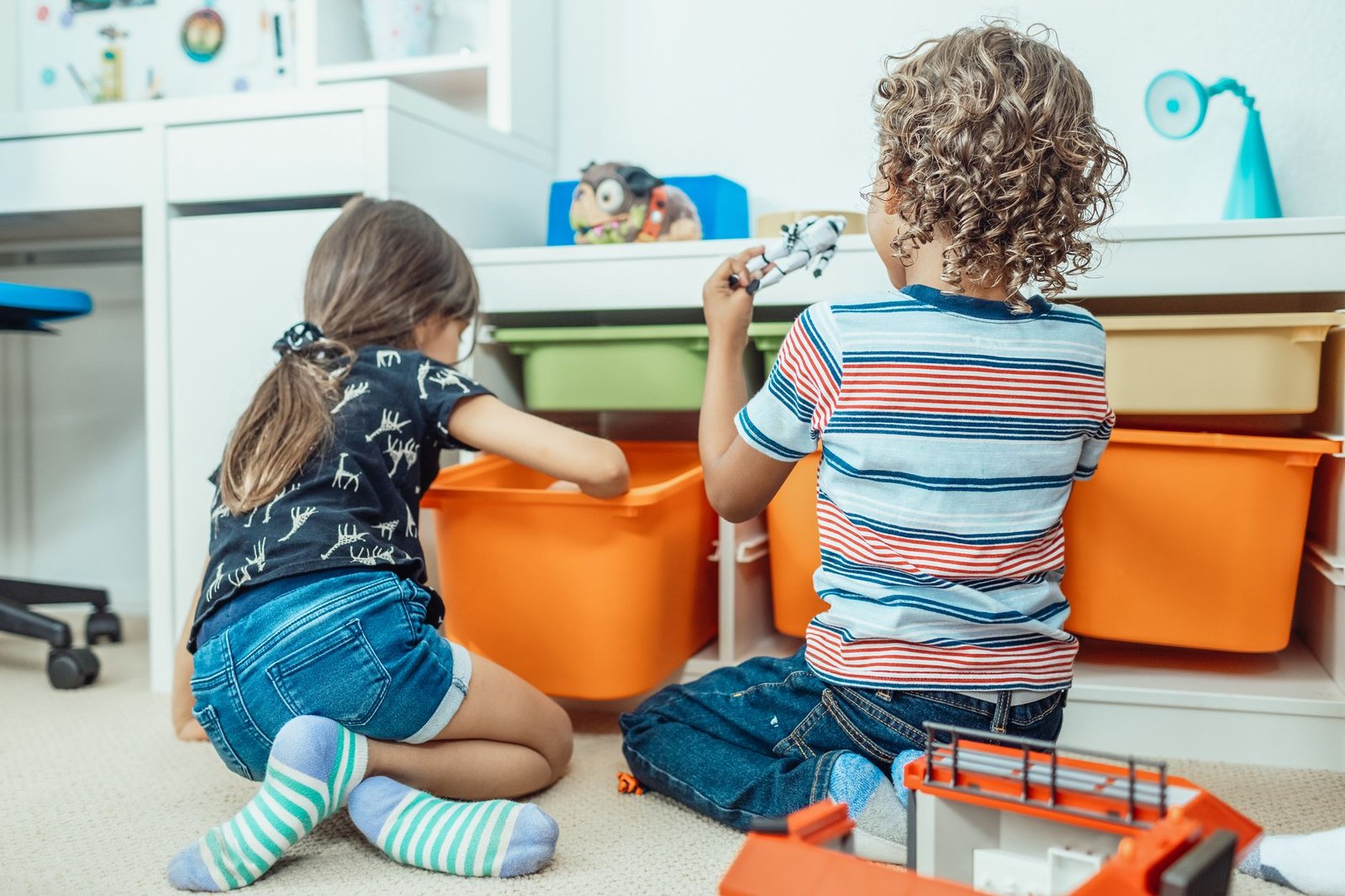
For an organization system to be truly sustainable, it must be easily navigable and usable by children themselves. This means opting for storage solutions that are at their height and simple to operate. Open bins, low shelving units, and pull-out drawers are generally preferable to lidded chests that can trap small fingers or require adult assistance. Clear storage containers, perhaps made from durable, transparent bioplastics or recycled PET, are increasingly popular in 2026. These materials offer robust longevity and visual clarity, allowing children to identify contents without emptying everything. Furthermore, innovations in modular storage cubes, often made from lightweight yet sturdy recycled polymers, allow for flexible configurations that can be re-arranged or expanded as a child’s collection or play space evolves. Labeling, particularly with pictorial representations for non-readers, further enhances accessibility and independence, reducing frustration during both playtime and cleanup.
Strategy 4: Utilize Vertical Space and Multi-functional Furniture
When floor space is limited, leveraging vertical dimensions becomes crucial for maximizing storage capacity without encroaching on valuable play areas. Wall-mounted shelving, pocket organizers attached to doors, or tall, narrow storage units can dramatically increase storage potential. In 2026, modular wall systems are trending, offering highly customizable configurations that can adapt as a child’s needs evolve – from toy storage to book display to even integrated desk space for older children. Furniture with integrated storage, such as ottomans with hidden compartments, window seats with cubbies, or beds with built-in drawers, also provides dual functionality, maximizing utility in compact spaces. These pieces often feature sustainable materials like FSC-certified wood, bamboo composites, or recycled textiles, aligning with modern eco-conscious design principles and providing durable, aesthetically pleasing solutions.
Cultivating Sustainable Habits and Mindsets
Strategy 5: Adopt the “One In, One Out” Principle
To prevent the constant re-accumulation of clutter, residents can institute a “one in, one out” rule. When a new toy enters the home, an existing one, preferably of a similar type or size, must be donated, passed on, or responsibly recycled. This practice not only keeps the toy collection manageable but also teaches valuable lessons about conscious consumption and the life cycle of possessions. It encourages children to make thoughtful decisions about what they truly value, fostering a sense of responsibility towards their belongings and the environment. This principle is fundamental to preventing even the most well-designed storage systems from becoming perpetually overwhelmed, promoting a sustainable approach to toy acquisition.
Strategy 6: Integrate Clean-Up into Daily Routines
Consistency is paramount for long-term success in maintaining an organized play space. Rather than viewing clean-up as an arduous, occasional task, it can be integrated into daily routines, perhaps before meals, baths, or bedtime. Short, frequent clean-up sessions are significantly less daunting for children than marathon tidying efforts. Setting a timer for 5-10 minutes of “power tidy” can make it feel like a focused, achievable game. The resident’s participation alongside the child during these times models the desired behavior and reinforces the expectation of a tidy space. This routine helps establish habits that endure beyond childhood, promoting lifelong organizational skills and a sense of order.
Strategy 7: Gamify Organization and Empower Choice
Transforming organization into an engaging and enjoyable activity can significantly increase children’s willingness to participate. Creating “cleanup challenges,” using catchy songs, or offering small, non-material rewards (like extra story time or choosing the next family activity) can make the process more enjoyable and less like a chore. Empowering children with choices, such as deciding where certain toys should live within their designated zone or which items to keep during decluttering, gives them ownership over the system. This autonomy fosters a greater sense of responsibility and pride in their play space, making them more likely to maintain the established order independently. In 2026, some interactive apps offer gamified chore tracking, turning tidying into a point-scoring activity, though simple, analogue methods often prove just as effective for younger age groups, emphasizing fun over technology.
Creating Enduring Order and Empowered Play
Implementing effective toy organization strategies is a worthwhile investment in both household harmony and a child’s developmental journey. By focusing on proactive decluttering, kid-centric design, and the cultivation of sustainable habits, residents can create play spaces that are not only tidy but also foster independence, creativity, and respect for possessions. Leveraging modern material innovations like durable bioplastics, recycled composites, and modular storage systems further ensures these solutions are durable, adaptable, and aligned with contemporary sustainability goals. When approached thoughtfully, an organized play area truly endures when it becomes a collaborative, empowering space for every member of the family, fostering joy and order for years to come.