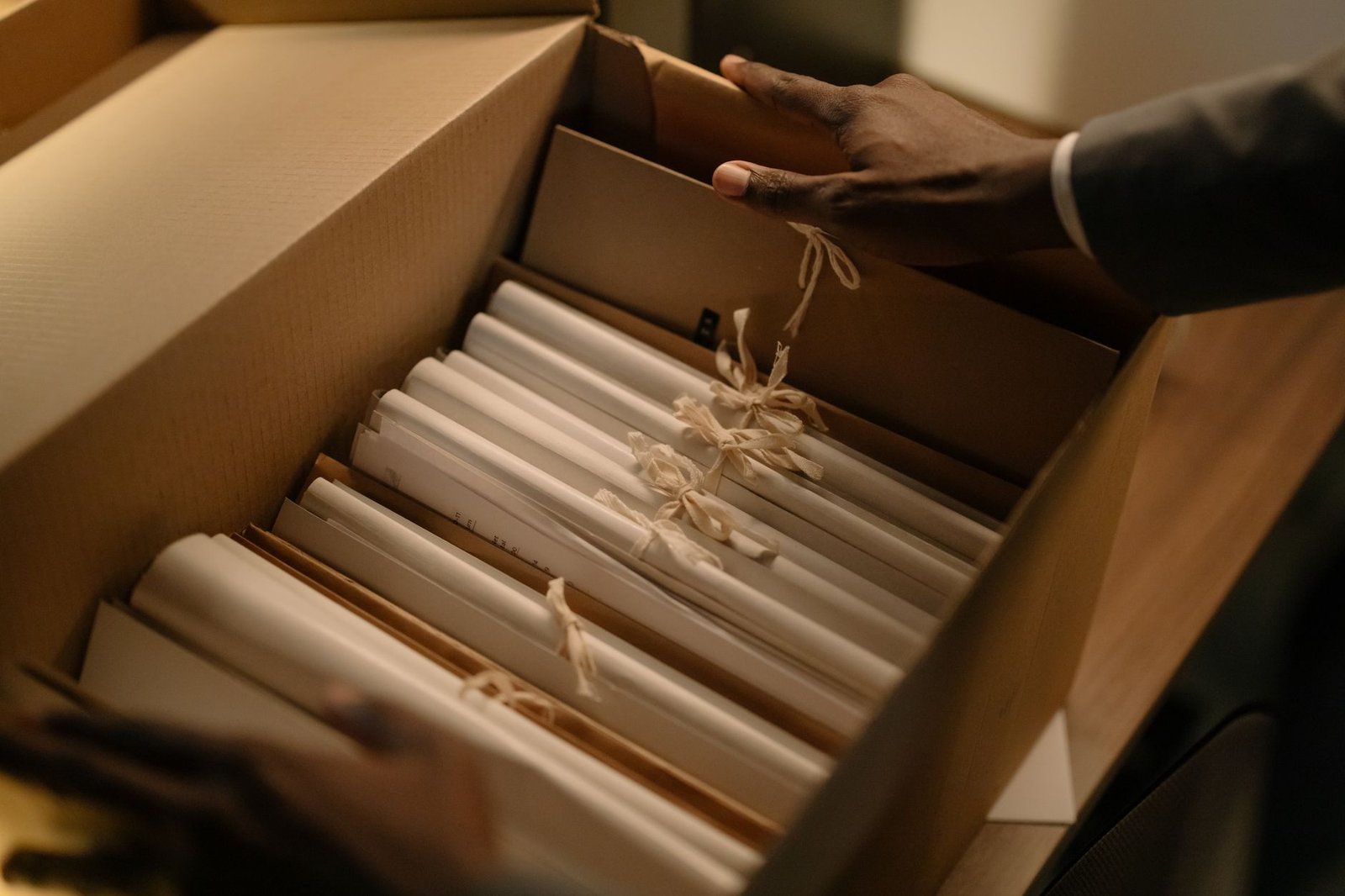
In 2026, the concept of domestic comfort extends beyond aesthetic appeal, deeply integrating with the efficiency and security of a well-organized living space. A critical, yet often overlooked, facet of this integrated design philosophy is the meticulous management of personal and household documents. Transitioning from antiquated stacks to sophisticated, secure, and digitally accessible systems is paramount for modern homeowners. This guide explores cutting-edge strategies for establishing robust document archive implementations, focusing on category segregation, fireproof asset security containment, and advanced digital conversion indexing, ensuring peace of mind and streamlined access for the resident.
Category Segregation: The Foundation of Order
Effective document management begins with a clear, logical segregation strategy. Without a well-defined categorization, even the most advanced storage solutions will fall short. The goal is to create an intuitive system where any document can be located swiftly and reliably.
Establishing Primary Classifications
The initial step involves establishing broad, overarching categories that encompass the entirety of a household’s paperwork. These primary classifications should be intuitive and reflect typical domestic needs. For instance, categories like “Financial,” “Medical,” “Household & Property,” “Legal,” and “Personal Identification” serve as excellent starting points. These larger buckets allow for quick initial sorting and prevent overwhelming the user with excessive detail prematurely. Each primary category should have a distinct physical or digital location, such as a dedicated filing cabinet drawer or a top-level digital folder.
Granular Sub-Categorization
Once primary categories are established, the process extends to granular sub-categorization. This is where precision prevents future frustration. Within “Financial,” sub-categories might include “Tax Records (2020-2026),” “Bank Statements,” “Investment Portfolios,” and “Loan Agreements.” Under “Medical,” sub-categories could include “Individual Health Records,” “Insurance Policies,” and “Prescription History.” For “Household & Property,” considerations include “Appliance Manuals,” “Utility Bills,” “Home Improvement Receipts,” and “Vehicle Titles.” The resident should tailor these sub-categories to their specific circumstances, ensuring they are comprehensive yet not overly complex. Consistency in naming conventions across both physical and digital archives is crucial for seamless integration.
- Financial: Tax Records, Bank Statements, Investment Portfolios, Loan Agreements, Insurance Policies (Life, Auto, Home).
- Medical: Individual Health Records, Insurance Policies (Health), Prescription Histories, Vaccination Records.
- Household & Property: Appliance Manuals, Utility Bills, Home Improvement Receipts, Warranties, Vehicle Titles & Registration, Property Deeds.
- Legal: Wills & Trusts, Birth/Marriage Certificates, Passports, Contracts, Power of Attorney.
- Personal: Education Records, Employment History, Photos & Memorabilia (archival copies).
Fireproof Asset Security Containment: Protecting Valuables
Physical document security is non-negotiable, particularly for irreplaceable documents like birth certificates, property deeds, and wills. Modern material developments in 2026 offer advanced solutions that go beyond traditional heavy safes, integrating seamlessly into contemporary home aesthetics.
Modern Material Developments (2026 Focus)
The year 2026 sees the proliferation of lightweight yet exceptionally durable composite materials for fireproof safes and security chests. These advanced composites, often incorporating aerospace-grade ceramics and multi-layer insulation, provide superior fire resistance ratings without the bulk and weight of older steel counterparts. Smart safe technology is also a significant trend, offering biometric access (fingerprint, facial recognition) and remote monitoring capabilities via integrated smart home systems. Some models even feature environmental sensors that alert the homeowner to excessive humidity or temperature fluctuations, preserving paper integrity. Recessed, wall-mounted, and even furniture-integrated fireproof units are becoming more common, designed to blend into interior design rather than stand out as an obvious security measure. Look for units with UL Classification 350 ratings for both fire and impact resistance.
Strategic Placement & Integration
The placement of physical security containers is as important as the container itself. While hidden locations are often considered, accessible yet discreet placements within a home office or a dedicated utility closet can be more practical for regular access. Units can be integrated into custom cabinetry, under built-in desks, or within reinforced closet systems, providing both security and aesthetic harmony. For higher-value documents, a multi-tiered approach might involve an off-site safety deposit box for primary originals, with secure, fireproof copies maintained domestically. The resident should assess the potential risks associated with the location and accessibility, considering factors such as water damage susceptibility and ease of evacuation in an emergency.
Digital Conversion Indexing: The Future of Access
While physical security remains vital, the convenience and redundancy offered by digital archives are indispensable in 2026. A structured digital conversion process not only declutters physical space but also provides unparalleled accessibility and resilience.
Advanced Scanning & OCR Technologies (2026 Focus)
Modern document scanners in 2026 are increasingly sophisticated, offering high-speed duplex scanning, automatic feeding, and integrated Optical Character Recognition (OCR) as standard. OCR technology has advanced significantly, allowing for highly accurate text recognition even from handwritten notes and older, faded documents. This enables full-text searchability across an entire digital archive, transforming how information is retrieved. Many scanners now include direct integration with cloud storage services and document management software, automating the upload and initial indexing process. Residents should consider high-resolution PDF/A (Archival) format for long-term preservation, ensuring future compatibility and readability.
Structured Digital Folder Systems
The digital archive should mirror the physical category segregation system for consistency. Creating a primary folder for “Financial,” with sub-folders for “Tax Records (2020-2026),” etc., ensures logical progression. Filenaming conventions are critical: employ a consistent format such as “YYYY-MM-DD_DocumentType_Description.pdf” (e.g., “2026-03-15_BankStatement_CheckingAcct.pdf”). This systematic approach makes files easily searchable and sortable. Utilize tags and metadata within document management software to enhance search capabilities further, allowing for cross-referencing by keywords, dates, or associated individuals.
Cloud Integration & Security Protocols
For optimal resilience, digital archives should leverage secure cloud storage. Providers offering end-to-end encryption, multi-factor authentication (MFA), and robust data redundancy across multiple geographical locations are preferred. Popular options like encrypted private cloud services or enterprise-grade platforms now provide consumer-friendly interfaces. A robust backup strategy is essential: ideally, a “3-2-1” rule should be implemented – three copies of data, on two different media types, with one copy offsite. This might involve a primary cloud storage, an encrypted external hard drive for local backup, and a second cloud provider or an entirely separate physical location for ultimate redundancy. Regular security audits of cloud accounts and updated cybersecurity practices are paramount for the resident.
Implementing a comprehensive document archive system is an investment in domestic tranquility and future preparedness. By thoughtfully segregating categories, securing vital assets with 2026’s advanced fireproof solutions, and embracing digital conversion indexing with robust security protocols, the homeowner establishes an infrastructure that supports effortless information retrieval and ensures the safekeeping of invaluable personal data. This proactive approach elevates the domestic environment, aligning it with the principles of intelligent design and lasting comfort.