
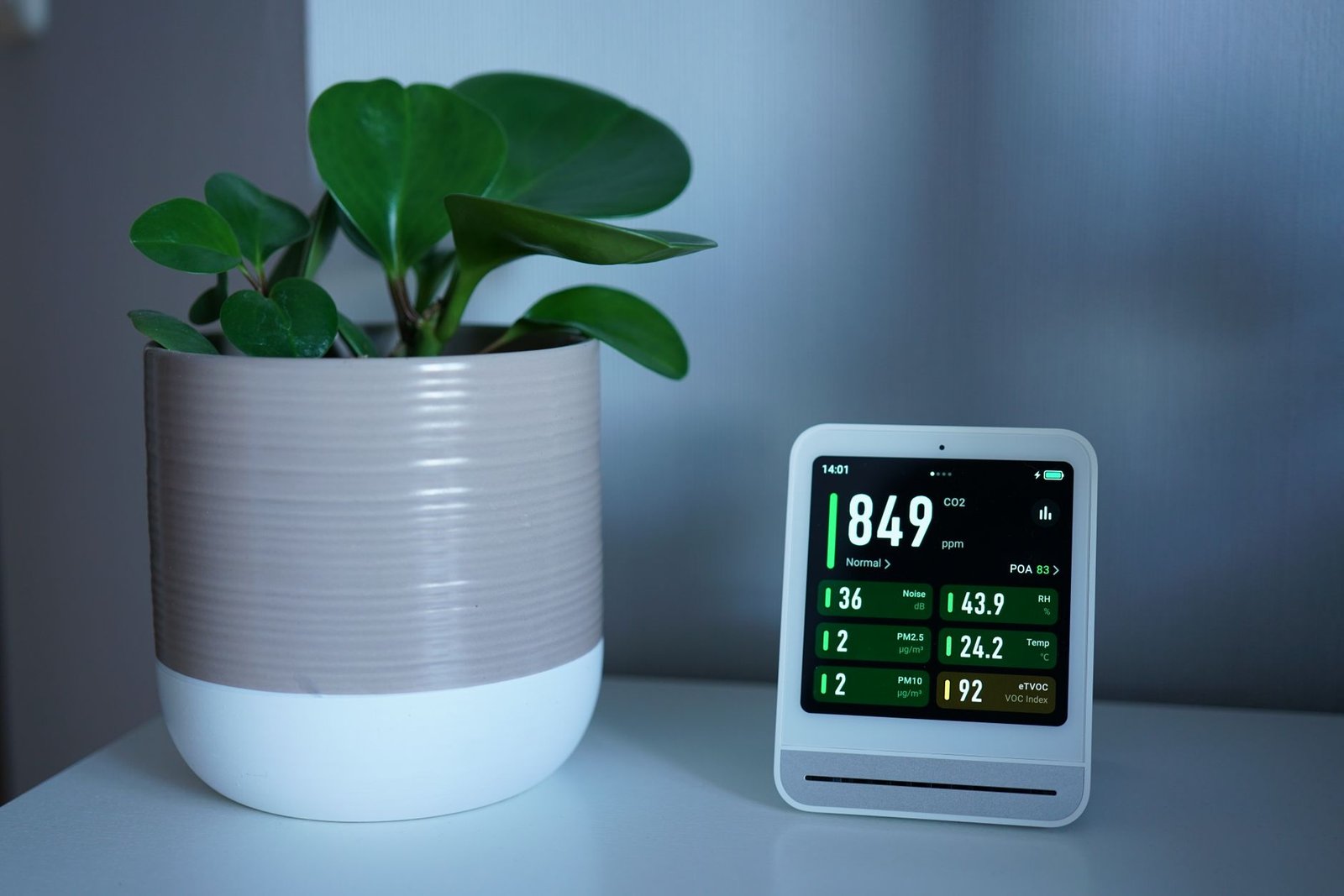
The imperative for optimal indoor air quality (IAQ) within contemporary residences has intensified, evolving into a foundational element of domestic well-being. As of 2026, smart home technology offers unprecedented capabilities for continuous pollutant assessment through sophisticated air quality monitoring arrays. These integrated systems provide granular insights into invisible atmospheric components, empowering homeowners with actionable data and automated responses to maintain superior air purity.
The Invisible Threat: Understanding Indoor Pollutants
Indoor environments, often perceived as sanctuaries, can paradoxically harbor higher concentrations of certain pollutants than outdoor settings. Identifying and mitigating these contaminants is paramount for respiratory health, cognitive function, and overall quality of life. Modern monitoring arrays are designed to detect and quantify a spectrum of these airborne threats, translating complex environmental data into comprehensible metrics for the resident.
Particulate Matter: The PM2.5 Challenge
Among the most critical indoor air pollutants is particulate matter, particularly PM2.5. These microscopic particles, with diameters smaller than 2.5 micrometers, are capable of deeply penetrating the respiratory system and entering the bloodstream. Sources include combustion byproducts from cooking, fireplaces, candles, and outdoor pollution infiltration. In 2026, smart monitoring systems feature enhanced laser scattering sensors that provide real-time, highly accurate PM2.5 readings, often differentiating between coarse and fine particles. Integration into smart thermostats and lighting fixtures simplifies installation and improves data collection granularity across dwelling zones.
Volatile Organic Compounds: Silent Contaminants
Volatile Organic Compounds (VOCs) represent another significant category of indoor air pollutants. These chemicals are off-gassed from a myriad of common household items and building materials, including paints, varnishes, adhesives, cleaning products, new furniture, and even personal care items. Chronic exposure to elevated VOC levels can lead to a range of health issues, from respiratory irritation to more severe long-term effects. Contemporary air quality arrays leverage advanced broad-spectrum and selective VOC sensors. While earlier systems provided general VOC indices, current technologies in 2026 employ multi-gas sensors or arrays of specific electrochemical sensors capable of identifying and quantifying individual VOCs such as formaldehyde, benzene, and toluene with greater precision. This specificity allows for more targeted mitigation, informing the resident about particular sources and enabling the selection of low-VOC alternatives. AI integration allows systems to learn a home’s normal VOC signature and flag unusual spikes, indicating a potential new source or ongoing issue.
Smart Arrays: The Future of Continuous Monitoring
The evolution of air quality monitoring has shifted from periodic checks to uninterrupted, intelligent assessment. Smart arrays are not merely sensors; they are interconnected networks providing a holistic view of the indoor atmospheric environment, leveraging cutting-edge technologies and sophisticated data processing.
Advanced Sensor Technology in 2026
The landscape of sensor technology in 2026 is characterized by unprecedented precision, durability, and integration capabilities. Beyond PM2.5 and VOCs, arrays routinely incorporate sensors for carbon dioxide (CO2), relative humidity, temperature, and ozone (O3), offering a comprehensive environmental profile.
- Miniaturization and Integration: Sensors are now seamlessly embedded into architectural elements, smart lighting, and even smart fabrics, becoming virtually invisible while providing widespread coverage.
- Multi-spectral Analysis: Emerging sensor types utilize spectroscopic methods to identify a broader range of airborne chemicals with enhanced accuracy, moving beyond generic VOC detection to pinpoint specific compounds.
- Self-Calibration and Longevity: Next-generation sensors feature advanced algorithms for self-calibration, reducing maintenance needs and ensuring consistent data accuracy over extended periods, addressing a common past limitation.
- Edge Computing: Data processing increasingly occurs at the device level, reducing latency and enhancing privacy, allowing for faster localized responses to detected pollutant spikes.
These technological leaps ensure data collected is vast, reliable, and immediate, forming the bedrock for informed environmental management.
Predictive Analytics and AI Integration
The intelligence of 2026’s smart air quality arrays lies in their integration with artificial intelligence and machine learning. These advanced algorithms analyze historical and real-time data to identify patterns, predict potential air quality degradation events, and offer proactive solutions.
- Pattern Recognition: AI identifies correlations between activities (e.g., cooking, cleaning), outdoor conditions, and indoor pollutant levels, providing contextual understanding.
- Predictive Modeling: Based on established patterns and external forecasts (e.g., pollen counts, local air quality advisories), the system can predict future IAQ declines, allowing for preventative actions.
- Personalized Thresholds: AI-driven systems learn the specific IAQ preferences and health sensitivities of the residents, customizing alert thresholds and automated responses accordingly.
- Anomaly Detection: Unforeseen spikes in pollutant levels are immediately flagged, differentiating them from normal fluctuations and alerting the resident to potential issues like a malfunctioning appliance or an unknown source.
This analytical layer transforms raw sensor data into actionable intelligence, providing a truly adaptive and protective indoor environment.
Proactive Purity: Automated Ventilation Strategies
The ultimate goal of continuous air quality monitoring is not merely detection, but proactive mitigation. Smart air quality arrays in 2026 are intrinsically linked to a home’s ventilation and air purification infrastructure, enabling automated, demand-controlled responses that optimize both air quality and energy efficiency.
Integrated Systems and HVAC Synergy
The synergy between air quality monitoring and a home’s heating, ventilation, and air conditioning (HVAC) system is more sophisticated than ever. When pollutant thresholds are exceeded, the array triggers an intelligent response from integrated systems:
- Demand-Controlled Ventilation (DCV): Instead of relying on fixed schedules, ventilation systems (including energy recovery ventilators or ERVs) are activated precisely when needed, drawing in fresh filtered air and expelling stale, pollutant-laden air. This minimizes energy waste while maximizing air changes.
- Smart Window Integration: For residences equipped with smart window and shade systems, the array can autonomously open windows when outdoor air quality is favorable and indoor pollutant levels are high, considering external factors like wind, rain, and security.
- Air Purifier Activation: Networked smart air purifiers are automatically engaged, often adjusting fan speeds and filter settings based on the type and concentration of detected pollutants.
- Zone-Specific Response: With multi-sensor arrays, ventilation can be targeted to specific rooms or zones experiencing poor air quality, avoiding unnecessary whole-house ventilation.
These integrated responses ensure that the indoor environment remains consistently clean without constant manual intervention, representing a significant leap in domestic comfort management.
Material Innovations for Enhanced IAQ
Beyond active systems, 2026 emphasizes passive and material-based solutions that complement smart monitoring arrays.
- Low-VOC and Biophilic Materials: Industry standards for interior finishes heavily favor low- or zero-VOC paints, sealants, flooring, and furniture. Biophilic design increasingly integrates natural materials and specific indoor plants for air purification, working in concert with mechanical systems.
- Photocatalytic Coatings: Advanced surface coatings, often containing titanium dioxide, are gaining traction. When exposed to light, these coatings break down VOCs and other airborne contaminants on contact, effectively turning walls and ceilings into passive air purifiers.
- Advanced Filtration Media: Innovations in HVAC filters include higher MERV ratings with minimal impact on airflow, as well as specialized activated carbon and electrostatic filters designed to capture specific chemical pollutants and ultra-fine particles more effectively.
These material developments reduce the baseline pollutant load, allowing automated ventilation systems to operate more efficiently and less frequently, contributing to a healthier home and reduced energy consumption.
Indoor air quality management in 2026 is defined by intelligence, integration, and proactive design. Smart air quality monitoring arrays, through meticulous assessment of particulate matter and volatile organic compounds, coupled with intelligent, automated ventilation, redefine domestic well-being. This sophisticated technology moves beyond reactive problem-solving, offering residents a continuously optimized, comfortable environment where unseen air elements are expertly managed. As these systems evolve, they will further cement their role as indispensable components of the modern, health-conscious home.