
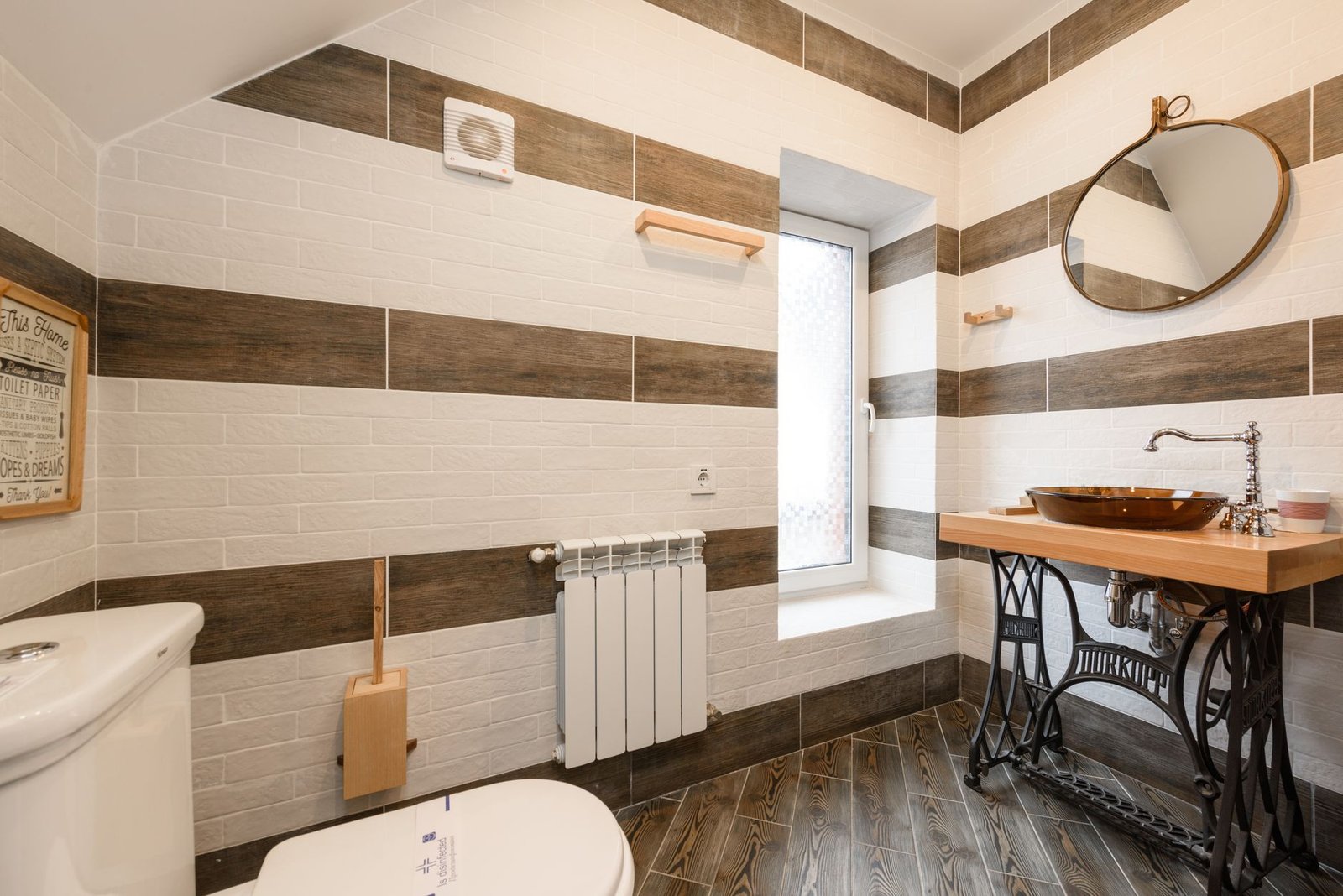
A small bathroom renovation does not necessitate a large financial outlay to achieve a modern, expansive feel. Indeed, transforming a compact washroom into a stylish and spacious-seeming sanctuary is entirely possible with strategic, budget-friendly tile selections for 2026. This article explores five affordable yet highly impactful tile options that can elevate the aesthetic and perceived size of any small bathroom, aligning with current design trends and material innovations without exceeding financial limitations.
Strategic Tiling for Small Bathrooms in 2026
Small bathrooms inherently present design challenges, primarily the perception of limited area. However, intelligent material choices, especially in tiling, can dramatically alter this impression. For 2026, the prevailing trend in compact interior design emphasizes visual continuity, light amplification, and the integration of subtle textures that add depth without overwhelming. The objective is to cultivate a space that feels larger, brighter, and more cohesive.
Contemporary advancements in tile manufacturing have made sophisticated aesthetics widely accessible, providing durable and attractive options across various price points. Homeowners can now achieve premium looks without the associated premium cost, benefiting from innovations in porcelain and ceramic production, alongside alternative materials. Critical considerations for small spaces include selecting tiles that minimize grout lines, effectively reflect light, or offer a consistent visual flow, all while adhering to a defined budget.
Top 5 Budget-Friendly Tile Options for Small Bathrooms in 2026
1. Large Format Porcelain Tiles
Paradoxically, large format tiles are an excellent solution for small bathrooms. The fundamental benefit lies in the significant reduction of grout lines, which creates a more seamless and expansive visual plane. Fewer interruptions allow the eye to glide across a smooth surface, making the space feel less fragmented and, consequently, larger. In 2026, large format porcelain is highly favored for its exceptional durability, water resistance, and remarkable ability to mimic high-end materials such as natural stone, concrete, or polished plaster, often at a fraction of the cost. Recent material developments include ultra-thin profiles, which simplify handling and installation. Opting for matte or low-sheen finishes provides a sophisticated, contemporary aesthetic without excessive reflectivity. For optimal effect, specifying a grout color that closely matches the tile is recommended to further enhance visual continuity.
2. Modern Subway Tiles
The classic subway tile remains a design staple due to its enduring appeal and affordability. However, for 2026, a refreshed approach to this versatile tile is recommended for small bathroom renovations. Rather than the traditional 3×6 inch format, consider elongated versions, such as 2×8 or 2×10 inches, which impart a contemporary edge. Installation patterns also offer a creative twist: a vertical stack can visually heighten the room, while a herringbone pattern introduces dynamic movement without overwhelming a confined area. Material innovations include subway tiles with subtle textures, such as a handmade “zellige-look” porcelain, which adds character and depth through variances in glaze and surface. Pairing these with a subtly contrasting or complementary colored grout, a popular trend in 2026, can define the pattern and inject personality into the space, all while maintaining a budget-friendly foundation.
3. Ceramic Patterned Accents
For residents wishing to infuse distinct personality and visual interest into a small bathroom without significant expense, ceramic patterned tiles are an excellent choice. Modern ceramic printing technologies enable intricate designs that convincingly replicate costly encaustic cement tiles or elaborate mosaics. The 2026 trend leans towards subtle geometric patterns, organic motifs, or soft, muted colors that offer a sophisticated accent rather than an overwhelming statement. In a compact space, these tiles are most effective when utilized strategically: as a striking feature wall behind a vanity, within a shower niche, or exclusively on the floor to clearly define the zone. When incorporating patterned tiles, it is essential to balance them with neutral, plain tiles on other surfaces to preserve an open and airy feel. This approach allows for a bold design impact on a budget, creating a memorable focal point.
4. Light-Colored Rectified Edge Tiles
Rectified edge tiles are precision-cut, enabling the use of extremely thin grout lines, often as narrow as 1/16th of an inch. This characteristic is invaluable in small bathrooms as it enhances the perception of a monolithic, continuous surface, making the area appear larger and more refined. When combined with light colors – such as warm whites, soft grays,