In an era characterized by increasing urbanization and the evolving dynamics of residential living, the judicious optimization of small spaces has become a paramount concern for homeowners and residents alike. The challenge of restricted residential environments necessitates an innovative approach, one that transcends traditional design paradigms to unlock the full potential of every square inch. This comprehensive guide explores cutting-edge strategies in spatial architecture and multifunctional furniture configurations, integrating 2026 industry trends and material developments to elevate storage capabilities and overall liveability within compact apartments.
Spatial Architecture: Redefining Boundaries
The perception of space within a compact apartment can be dramatically altered through intelligent architectural interventions. Rather than merely decorating, spatial architecture focuses on manipulating the physical and visual boundaries of a room to create a sense of expansive openness and tailored functionality.
Fluid Layouts & Zone Creation
Open-plan living remains a cornerstone of modern apartment design, yet effective zone creation is crucial for maintaining order and purpose. Instead of rigid walls, flexible solutions are employed. Sliding panels crafted from translucent smart glass, which can change opacity on demand, offer privacy when needed and disappear when not. Bookshelves on casters or modular partition systems allow the resident to reconfigure areas for dining, working, or relaxation with minimal effort. Strategically placed area rugs also serve as powerful visual anchors, defining distinct functional zones within a larger open space without imposing physical barriers. The objective is to ensure a seamless visual flow that prevents the space from feeling cluttered or compartmentalized.
Integrated & Concealed Solutions
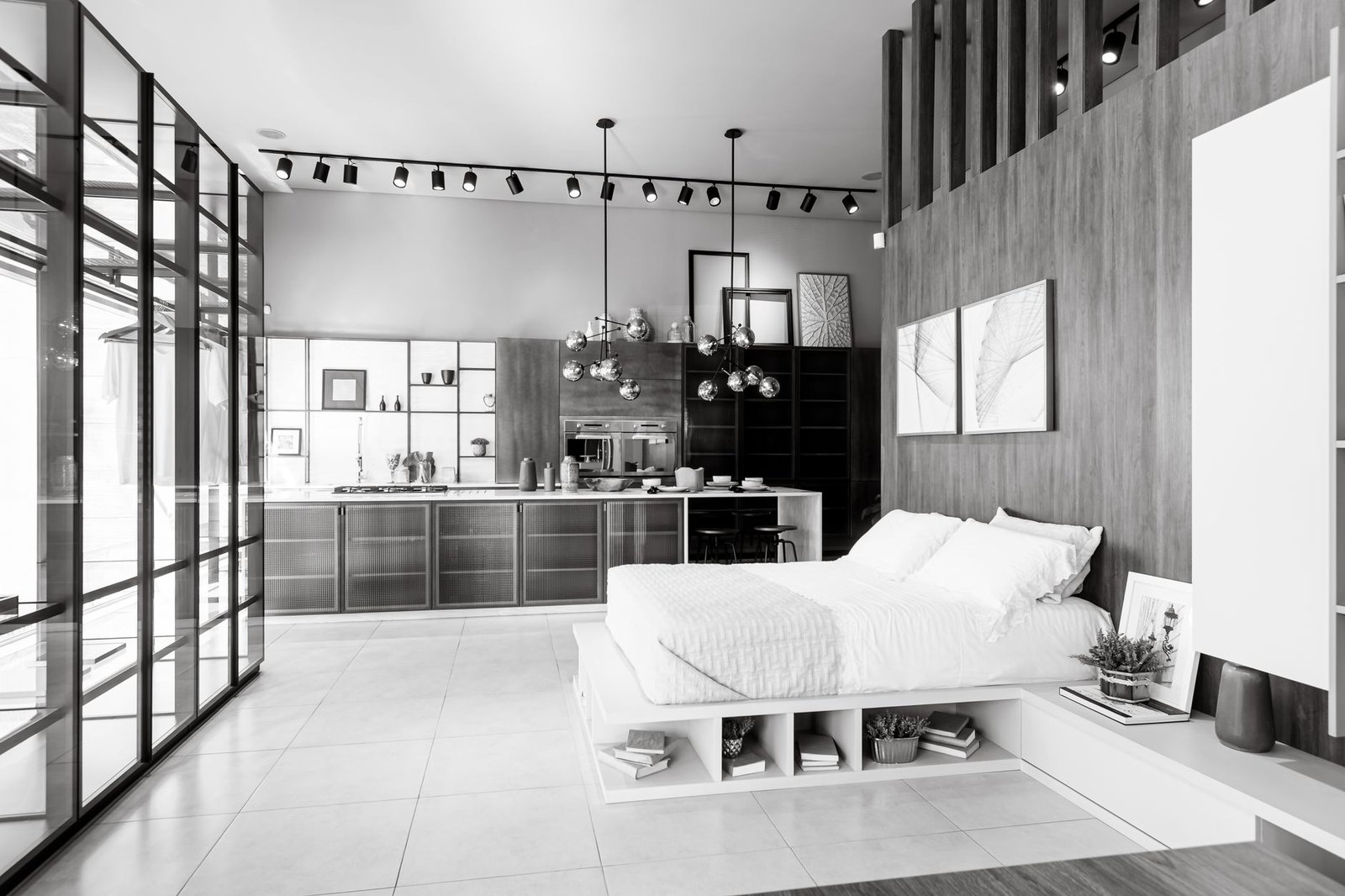
Maximizing utility often involves integrating elements directly into the building’s fabric. Built-in shelving, extending from floor to ceiling, capitalizes on vertical space that might otherwise go unused. Wall-mounted desks that fold away flush with the wall, or beds that retract into a cabinet or ceiling system, exemplify this approach. Pocket doors, instead of traditional hinged doors, free up valuable swing space, while toe-kick drawers in kitchen cabinetry provide discreet storage for less frequently used items. These concealed solutions contribute significantly to a clean aesthetic and an uncluttered environment, enhancing the overall psychological comfort of the homeowner.
Multifunctional Furniture: The 2026 Imperative
The furniture chosen for a small apartment must work harder, offering multiple utilities to justify its footprint. The year 2026 sees a heightened emphasis on modularity, adaptability, and integration with smart technologies.
Beyond the Basics: Smart Transformations
Modern multifunctional furniture goes far beyond the simple sofa bed. Contemporary designs incorporate sophisticated mechanisms allowing pieces to transform effortlessly from one function to another. Examples include:
- Coffee-to-Dining Tables: Adjustable-height tables that transition from a low coffee table to a full-sized dining surface, often with expandable leaves.
- Modular Seating Systems: Sofas or sectionals composed of individual modules that can be rearranged into various configurations, including guest beds or additional seating.
- Storage Ottomans & Benches: Seating solutions that double as storage chests, ideal for blankets, books, or seasonal items.
- Desk-Bed Combos: Units where a desk surface retracts or slides to reveal a comfortable bed, perfect for studio apartments or guest rooms.
These pieces are engineered for intuitive operation, ensuring that transitions are smooth and require minimal effort from the user, facilitating a dynamic living experience tailored to daily needs.
Material Innovations & Aesthetics
The aesthetic and durability of multifunctional furniture in 2026 are significantly influenced by advancements in materials. Lightweight yet robust alloys, often with recycled content, provide the structural integrity needed for complex transformations without adding unnecessary bulk. Sustainable woods like bamboo and fast-growing composites are increasingly prevalent, aligning with eco-conscious trends. Furthermore, smart textiles with features such as stain resistance, temperature regulation, and even integrated wireless charging capabilities are becoming standard. The design ethos leans towards clean lines, neutral palettes, and biophilic elements, ensuring that furniture pieces contribute to a calming, visually harmonious environment, despite their utilitarian complexity.
Strategic Storage & Vertical Dominance
Effective storage is the backbone of small space optimization. It is not merely about finding places to put things, but about creating systems that are both highly efficient and aesthetically pleasing, minimizing visual clutter.
Unlocking Every Nook
A systematic approach to storage involves identifying and utilizing every conceivable space. Under-bed drawers, often on rollers or integrated into lift-up bed frames, provide substantial hidden storage. Built-in banquettes with hinged seats offer both seating and storage in dining or living areas. Vertical pull-out pantries in kitchens maximize narrow spaces between appliances. Even decorative elements, such as hollow end tables or picture frames with hidden compartments, can contribute to the overall storage capacity. The objective is to make storage feel intrinsic to the apartment’s design, rather than an afterthought.
The Power of Verticality
When floor space is limited, the only way to go is up. Verticality is a key principle in small space design, drawing the eye upwards and creating an illusion of greater height and volume. Floor-to-ceiling shelving units, custom-built to fit specific wall dimensions, offer extensive display and storage opportunities without encroaching on essential pathways. Wall-mounted cabinets, floating shelves, and ladder-style bookcases are excellent for books, decor, and essential items. Additionally, vertical gardens or plant walls not only enhance the apartment’s aesthetic but also contribute to improved air quality and a sense of connection to nature, even in urban settings.
Integrated Technology & Sustainable Design
The modern small apartment is not just about physical space; it’s about a seamless, comfortable, and efficient living experience, often powered by integrated technology and sustainable practices.
Smart Home Synergy
In 2026, smart home technologies are no longer separate gadgets but are integrated elements of the living environment. Automated lighting systems can adapt to the resident’s schedule or mood, conserving energy. Climate control systems learn preferences, optimizing temperature and humidity. Integrated sound systems deliver high-quality audio without visible wires or bulky speakers. Wireless charging pads are discreetly embedded into tabletops and nightstands, eliminating cable clutter. These technological enhancements contribute to a highly functional and comfortable apartment, simplifying daily routines and maximizing the utility of the space through invisible efficiencies.
Eco-Conscious Living in 2026
Sustainability is a core tenet of modern design. The selection of materials and finishes for small apartments in 2026 heavily favors eco-friendly options. This includes low-VOC (Volatile Organic Compound) paints and sealants that improve indoor air quality. Recycled and upcycled materials are used extensively, from countertops made of recycled glass to flooring crafted from reclaimed wood or cork. Mycelium-based composites, a cutting-edge material derived from fungi, are emerging for furniture and insulation, offering lightweight and biodegradable alternatives. Products designed for longevity and repairability, rather than disposability, further reduce environmental impact. Residents can feel confident that their optimized space aligns with global efforts for a greener future.
Ultimately, transforming a compact apartment into a highly functional and aesthetically pleasing haven requires foresight, creativity, and an understanding of modern design principles. By embracing intelligent spatial architecture, selecting versatile multifunctional furniture, and strategically implementing vertical and hidden storage, the homeowner can create an environment that feels far more expansive and accommodating than its dimensions suggest. The integration of 2026’s material innovations and smart home technologies further elevates the living experience, proving that even the most restricted residential environment can be a masterpiece of design and comfort.