
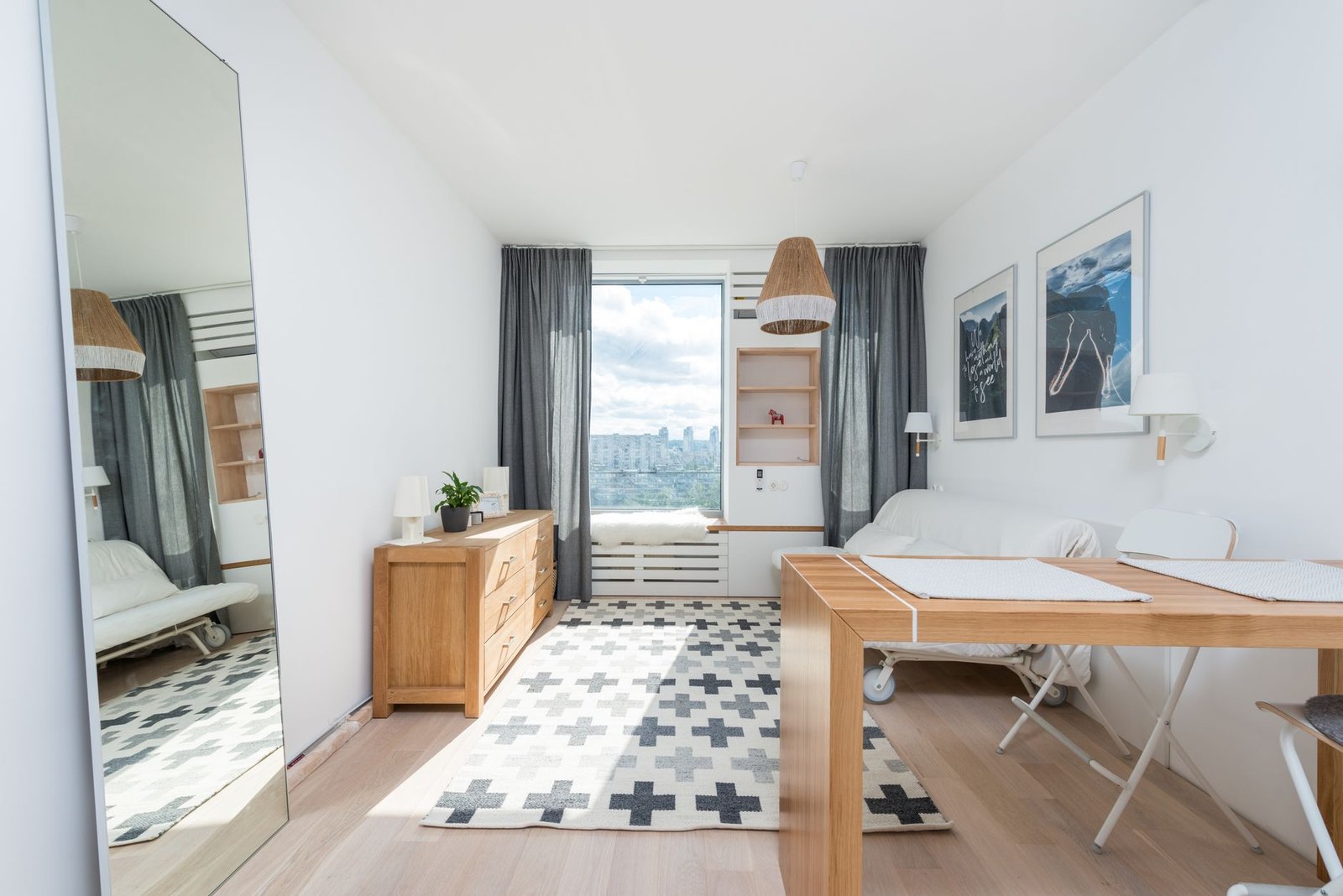
For residents seeking to expand the visual dimensions of compact living areas, mirrors serve as an invaluable design tool. By artfully reflecting light and creating optical illusions of depth, these versatile elements can dramatically transform the perceived scale and brightness of any small room. This article explores five specific and stylish methods to harness the power of mirrors, incorporating contemporary design aesthetics and leveraging 2026 industry advancements to visually enlarge tight spaces.
Strategic Placement for Enhanced Depth and Light
One of the most effective strategies involves placing a large mirror directly opposite a window or a significant light source. This technique maximizes the reflection of natural light, flooding the room with brightness and creating an illusion of an expanded view beyond the wall. The reflected outdoor scene or distant wall effectively doubles the perceived depth of the room.
Optimal Positioning for Illusion
- Opposite a Window: Positioning a mirror to face a window not only brings in more light but also reflects the outdoor landscape, blurring the lines between indoor and outdoor spaces. This creates a sense of openness and connection to the exterior.
- Adjacent to Light Sources: When natural light is limited, placing a mirror near a prominent artificial light fixture, such as a pendant lamp or a wall sconce, amplifies its output, brightening darker corners and adding an inviting glow.
Modern applications in 2026 often feature oversized, frameless mirrors with clean lines, integrating seamlessly into minimalist and contemporary interiors. Advancements include smart mirrors with integrated, tunable LED backlighting that can adjust color temperature to mimic natural daylight cycles, further enhancing the room’s perceived luminosity throughout the day.
Creating Expansive Mirror Walls or Panels
Transforming an entire wall, or a significant portion of it, into a mirrored surface is a bold yet highly effective method for spatial enlargement. This approach eliminates visual breaks, making the room feel considerably longer or wider by creating an uninterrupted reflection of the opposing space.
Seamless Mirrored Surfaces
- Full Wall Coverage: A floor-to-ceiling, wall-to-wall mirror panel acts as a visual extension of the room, making it appear as if the space continues indefinitely. This works exceptionally well in hallways, dining areas, or small living rooms.
- Segmented Mirror Paneling: For a more architectural feel, segmented mirror panels or geometric mirror tiles can be used to create a textured yet reflective surface. This offers a modern alternative to a single large sheet, introducing visual interest while maintaining the expansive effect.
In 2026, material innovations include lightweight, shatter-resistant acrylic mirror panels that offer easier installation and enhanced safety for large-scale applications. Furthermore, trends lean towards subtly tinted mirrors—bronze, grey, or smoked finishes—which add a layer of sophistication and depth without sacrificing the expansive effect. Some bespoke installations incorporate biometric integration, allowing for customizable privacy overlays or even subtle digital displays on demand.
Leveraging Mirrored Furniture and Accents
Integrating mirrored furniture and decorative accents is a subtle yet powerful way to introduce reflective surfaces throughout a small room without overwhelming the space. These pieces reflect ambient light and the surrounding decor, contributing to an airy and open atmosphere.
Functional and Reflective Elements
- Mirrored Coffee Tables and Side Tables: These pieces reflect the floor and ceiling, making the immediate area feel less cluttered and more expansive. Their reflective nature helps them blend into the background rather than visually dominating the space.
- Mirrored Cabinetry and Dressers: Opting for furniture with mirrored facades can make bulky storage units appear lighter and less imposing. The reflections help them dissolve into the room rather than acting as solid barriers.
- Decorative Mirror Objects: Vases, trays, or sculptural elements with mirrored surfaces subtly catch and bounce light, adding sparkle and a sense of openness to shelves or tabletops.
Contemporary designs for 2026 emphasize geometric shapes and clean lines in mirrored furniture, often paired with integrated LED strip lighting along edges for a futuristic glow. Sustainable materials, such as recycled glass or bio-resins infused with reflective particles, are also gaining prominence, offering both aesthetic appeal and environmental responsibility. Smart furniture pieces may feature embedded, transparent displays that activate only when needed, maintaining a sleek, mirrored surface most of the time.
The Gallery Wall Effect with Multiple Mirrors
Instead of a single large mirror, a collection of smaller mirrors artfully arranged in a gallery-wall style can create a dynamic and visually stimulating focal point that simultaneously enhances the sense of space. This method allows for significant creative expression while achieving the desired expansive effect.
Artistic Mirror Arrangements
- Varied Shapes and Sizes: Combining mirrors of different shapes—circles, ovals, rectangles, and organic forms—and varying sizes adds visual interest and prevents the arrangement from looking monotonous.
- Mixed Framing: Incorporating a mix of frame styles, from sleek metallics to minimalist wood or even frameless designs, can complement diverse interior aesthetics. Consider matte black, brushed brass, or sustainable bio-resin frames for modern appeal.
- Strategic Grouping: Arranging mirrors in an asymmetrical yet balanced composition on a prominent wall draws the eye, making the wall appear larger than its actual dimensions.
For 2026, this trend embraces asymmetrical compositions and mixed media frames. Digital mirrors are also emerging, offering customizable reflective surfaces that can display artwork or dynamic patterns when not serving as a pure reflection, adding an interactive dimension to the gallery wall. Advancements in lightweight mirror composites allow for larger, more intricate arrangements with ease of installation.
Illuminating Corners and Nooks
Often, small rooms have underutilized corners or dark alcoves that contribute to a cramped feeling. Placing a mirror in these specific areas can dramatically brighten and open them up, making the entire room feel more spacious and inviting.
Targeted Reflection for Brightness
- Corner Placement: A tall, narrow mirror positioned in a dark corner can reflect light from the main part of the room, effectively eliminating the dark spot and visually extending the wall.
- Alcove Enhancement: Built-in shelves or recessed alcoves can feel deep and dark. Lining the back wall of an alcove with a mirror instantly brightens it and transforms it into a display area that appears much shallower and more integrated with the room.
- Behind Furniture: Placing a mirror behind a sofa or a console table in a tight spot can push back the perceived boundary of the wall, creating an illusion of more space behind the furniture.
Modern mirror technology for 2026 includes backlit and edge-lit mirrors specifically designed for task lighting and ambient illumination in dark areas. These often feature gesture control or smart home integration, allowing the resident to adjust brightness and color temperature. Anti-fog and self-cleaning coatings are standard, ensuring clarity and ease of maintenance, particularly in spaces like compact bathrooms or utility nooks where reflections are crucial for enhancing perceived volume.
Conclusion
Mirrors remain a timeless and highly effective design element for homeowners aiming to enhance the sense of space and brightness in smaller rooms. By employing strategic placement, creating expansive mirrored surfaces, integrating reflective furniture, curating gallery walls, or illuminating dark corners, residents can profoundly alter the perception of a room’s dimensions. Incorporating the modern aesthetics and technological advancements of 2026—from smart mirror functionality to sustainable materials and innovative installations—ensures these techniques are not only practical but also align with contemporary style and efficiency. The thoughtful application of mirrors transforms compact living areas into visually expansive, light-filled havens, demonstrating that even the smallest spaces hold immense design potential.