
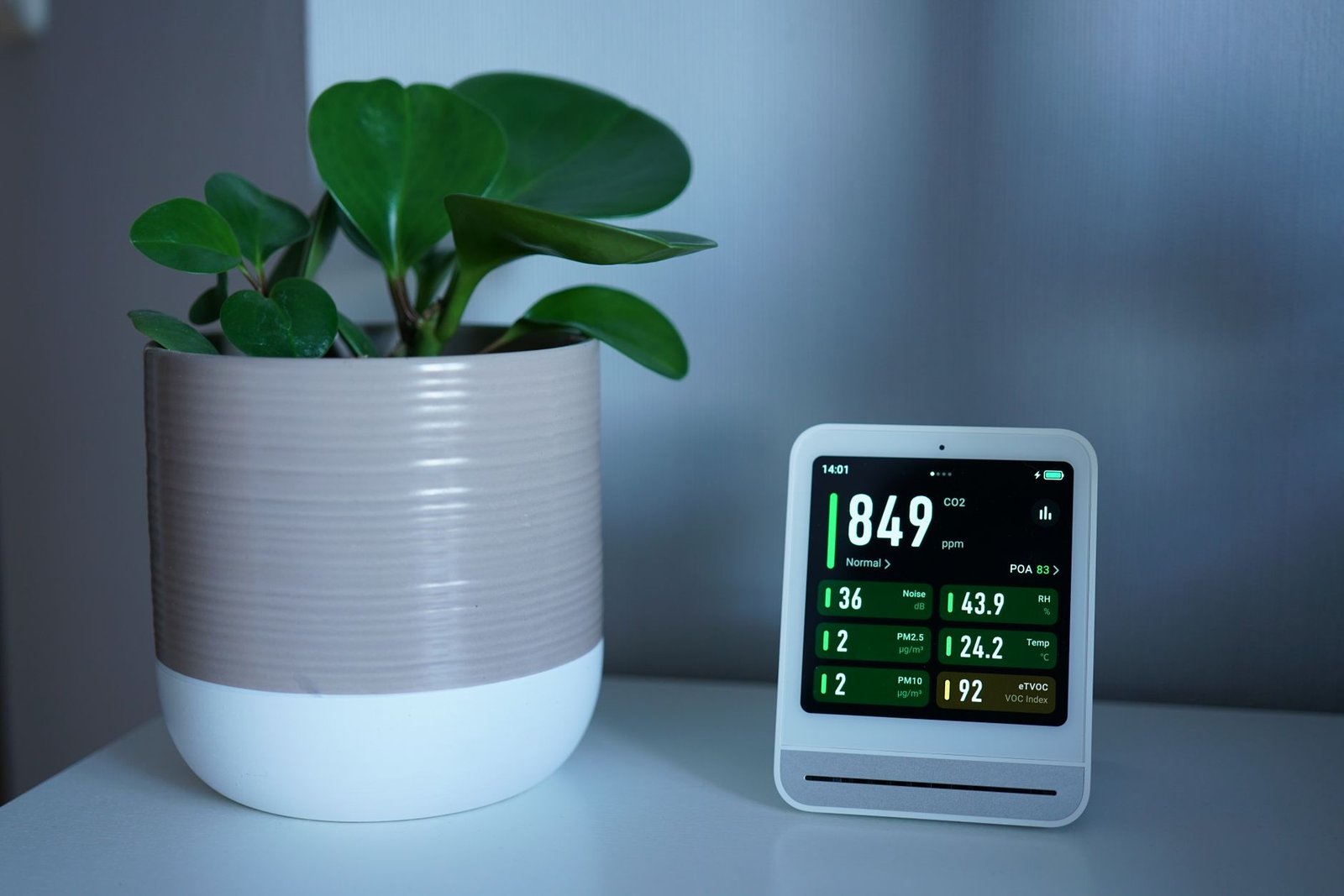
Maintaining optimal indoor air quality (IAQ) has transitioned from a niche concern to a central pillar of domestic comfort and health. As modern residences become increasingly sealed for energy efficiency, the concentration of indoor pollutants can escalate, posing significant challenges to resident well-being. This necessitates a sophisticated approach to mitigating airborne particulates, volatile organic compounds (VOCs), and other microscopic contaminants. Advanced air purification systems, featuring true HEPA filtration, robust active carbon absorption, and validated Clean Air Delivery Rates (CADR), represent the vanguard in creating healthier residential environments. The year 2026 brings forth a landscape rich with innovation in this critical domain, driven by material science advancements and smart home integration.
The Core of Clean: True HEPA Filtration Explained
True HEPA (High-Efficiency Particulate Air) filtration stands as the foundational technology in high-performance air purification. A true HEPA filter is engineered to capture at least 99.97% of airborne particles as small as 0.3 microns in diameter. This standard is not arbitrary; the 0.3-micron size, often referred to as the Most Penetrating Particle Size (MPPS), is the most difficult particle size to capture, meaning efficiency is even higher for particles both larger and smaller than this benchmark. These filters are exceptionally effective against a wide spectrum of common indoor allergens and irritants, including:
- Dust Mites and Debris: Microscopic remnants that trigger allergic reactions.
- Pollen: Seasonal irritants that contribute to respiratory discomfort.
- Pet Dander: Tiny skin flakes from animals, a common allergen.
- Mold Spores: Fungal reproductive cells that can proliferate in humid conditions.
- Bacteria and Viruses: Certain airborne pathogens, especially those larger than 0.3 microns or attached to larger dust particles.
By 2026, true HEPA filters are benefiting from new material developments. Advances include enhanced pleating designs that increase surface area without expanding physical size, leading to greater dust holding capacity and extended filter lifespan. Some contemporary HEPA media now incorporate bio-static coatings or silver ion treatments, actively inhibiting microbial growth on the filter surface itself, thus preventing secondary contamination and improving overall system hygiene. These innovations ensure that the resident experiences consistent filtration efficacy and reduced maintenance frequency.
Beyond Particulates: Active Carbon Absorption Capacities
While HEPA filters excel at capturing solid particulates, they are largely ineffective against gaseous pollutants. This is where active carbon absorption becomes indispensable. Activated carbon, or charcoal, is a highly porous material that undergoes a special treatment process to create millions of tiny pores, significantly increasing its surface area. This vast internal surface allows for a process called adsorption, where gas molecules adhere to the surface of the carbon through chemical or physical bonds. This mechanism effectively removes:
- Volatile Organic Compounds (VOCs): Emitted from paints, cleaning products, furnishings, and building materials (e.g., formaldehyde, benzene).
- Odors: From cooking, pets, smoke, and general household activities.
- Gases: Including ozone, nitrogen dioxide, and other airborne chemicals.
The efficacy of an active carbon filter is directly proportional to the amount and quality of carbon used. In 2026, the trend in residential purifiers is towards significantly deeper carbon beds and specialized carbon formulations, sometimes infused with chemical sorbents (like potassium permanganate) to target specific, stubborn VOCs more aggressively. Composite filters, which layer different types of sorbent materials, are becoming more common, offering a broader spectrum of gas and odor removal. For the homeowner, this means a tangible improvement in air freshness and a substantial reduction in the unseen chemical burden within the living space.
Quantifying Clean: Understanding Clean Air Delivery Rate (CADR)
For an air purifier to be truly effective, it must not only filter efficiently but also circulate a sufficient volume of air. This is where the Clean Air Delivery Rate (CADR) metric, established by the Association of Home Appliance Manufacturers (AHAM), provides critical guidance. CADR measures how quickly an air purifier removes specific pollutants (smoke, pollen, dust) from a room. It is expressed in cubic feet per minute (CFM), indicating the volume of filtered air delivered into the room. A higher CADR value signifies faster purification for a given pollutant.
Understanding CADR is crucial for matching a purifier’s capacity to the size of the residential space it serves. The general recommendation is to select a purifier with a CADR value that is at least two-thirds the square footage of the room. For example, a 150-square-foot room would ideally require a purifier with a CADR of 100 CFM or higher for effective air changes per hour (ACH). Modern interpretation of CADR often emphasizes achieving at least four to five air changes per hour for optimal health benefits, especially in bedrooms or spaces with higher occupancy or pollutant sources.
By 2026, CADR is increasingly integrated with smart home ecosystems. Advanced purifiers feature built-in air quality sensors (detecting PM2.5, VOCs, CO2) that can automatically adjust fan speed and filtration intensity to maintain desired IAQ levels. This intelligent operation ensures energy efficiency while providing continuous, responsive air purification, minimizing the need for manual intervention by the resident.
2026 Industry Trends & Material Innovations
The air purification landscape in 2026 is characterized by a confluence of technological advancements and a heightened focus on user experience and sustainability.
Smart Integration and Automation
Air purifiers are no longer standalone appliances but integral components of smart home ecosystems. IoT connectivity allows for remote control via smartphone apps, integration with voice assistants, and seamless automation based on real-time indoor and outdoor air quality data. Predictive algorithms can anticipate peak pollutant times (e.g., during pollen season or when cooking) and preemptively ramp up purification, ensuring consistent air quality.
Enhanced Energy Efficiency and Acoustics
With an emphasis on reducing household energy consumption, 2026 models feature highly efficient EC (electronically commutated) motors that deliver powerful airflow with significantly lower power draw. Acoustic engineering has also made great strides, resulting in purifiers that operate almost silently even at higher fan speeds, a crucial factor for comfort in residential settings.
Sustainable Design and Filter Longevity
Manufacturers are increasingly adopting sustainable practices. This includes using recyclable filter frames, durable and long-lasting filter media, and designing units for easy end-of-life recycling. Innovations in filter technology are extending the lifespan of both HEPA and carbon filters, reducing replacement frequency and environmental impact. Some systems offer modular filter designs, allowing the user to replace only the exhausted component rather than the entire filter assembly.
Hybrid Filtration Technologies
While true HEPA and active carbon remain paramount, 2026 sees the rise of sophisticated hybrid systems. These units combine the core technologies with additional purification methods such as UV-C light (for microbial inactivation), electrostatic precipitation (for ultra-fine particles), or advanced photocatalytic oxidation (PCO) for breaking down VOCs at a molecular level. These integrated approaches offer a comprehensive defense against a broader range of indoor air contaminants, providing the homeowner with a multi-layered air purification strategy.
Holistic Air Quality Management for the Homeowner
Advanced air purification systems, while powerful, are most effective when part of a holistic IAQ management strategy. This includes adequate ventilation – whether through natural means or mechanical heat recovery ventilators (HRVs) – to introduce fresh outdoor air. Source control, such as selecting low-VOC building materials and furnishings, promptly cleaning spills, and managing indoor humidity, also plays a critical role in minimizing pollutant generation. The resident who combines these strategies with a high-performance air purification system can achieve a truly superior indoor environment.
The evolution of air purification technology underscores a global commitment to healthier living spaces. For the resident prioritizing domestic comfort and long-term well-being, investing in a system that incorporates robust true HEPA filtration, substantial active carbon absorption, and an appropriate CADR, while leveraging the smart innovations of 2026, represents a proactive and essential step towards optimal indoor air quality.